Buy baptisten.eu ?
We are moving the project
baptisten.eu .
Are you interested in purchasing the domain
baptisten.eu ?
domain@kv-gmbh.de · 0541-91531010
Buy baptisten.eu ?
What material did Rutherford need?
Rutherford needed a material that was very thin and could be easily penetrated by alpha particles. He used gold foil because it could be hammered into extremely thin sheets, just a few atoms thick. This allowed the alpha particles to pass through the foil and be detected on the other side, which was crucial for his experiment to study the structure of the atom. **
What is the Rutherford nuclear model?
The Rutherford nuclear model, proposed by physicist Ernest Rutherford in 1911, describes the structure of an atom as a small, dense, positively charged nucleus at the center, surrounded by negatively charged electrons orbiting around it. This model was based on the results of Rutherford's famous gold foil experiment, which showed that most of the alpha particles passed through the foil undeflected, but some were deflected at large angles, indicating the presence of a small, dense nucleus. The Rutherford model laid the foundation for our modern understanding of the atomic structure and the development of the atomic theory. **

Similar search terms for Rutherford
Top-Angebote
Products related to Rutherford:
-
Adam Rutherford How to Argue With a Racist: History, Science, Race - Non Fiction - HardbackTitle:. How to Argue With a Racist: History, Science, Race and Reality Condition: BRAND NEW. Format: Hardcover Overview:. Race is widely perceived as a real category, but the book’s core argument is that race is a social construct while racism remains a tangible and dangerous force in society. Adam Rutherford guides readers through a rigorous tour of history, genetics, and contemporary culture to show why attempts to anchor human difference in biology are scientifically unfounded and ethically harmful. This book equips readers with clear, evidence-based explanations of how human genetic variation actually works, how populations are related, and why modern science rejects fixed racial hierarchies. It also dissects the seductive but misleading uses of data in public debates about migration, education, intelligence, and sport. Written for curious readers and students alike, the author translates complex genetics into accessible, concrete examples drawn from real-world situations, helping readers recognize pseudoscience, debunk stereotypes, and engage in constructive dialogue. The hardcover edition presents a concise, readable companion for classrooms, book clubs, or thoughtful conversations on social media, making this a vital resource in the ongoing fight against racial prejudice. What Makes This Book Stand Out:. Adam Rutherford blends a historian’s perspective with a geneticist’s precision to illuminate why race as a biological category never stood up to scrutiny, and why racism persists despite that truth. What distinguishes this work is its dual clarity and courage: it not only unpacks the science behind human diversity but also analyzes the social forces that weaponize that science to justify discrimination. Rutherford’s approach is decidedly practical—he offers approachable explanations of population genetics, discusses how data can be misinterpreted, and provides ready-to-use arguments for conversations with skeptical friends, students, or readers online. He also foregrounds the ethics of scientific communication, urging readers to demand evidence, question assumptions, and separate human value from statistical variation. This is more than a textbook; it’s a persuasive, timely guide for anyone who wants to challenge racism with intellectual honesty and empathy. Who This Book Is Perfect For:. If you’re curious about how science intersects with social justice, this book is for you. It’s ideal for students, educators, journalists, and anyone engaging in public debates about race, genetics, and identity. Parents and caregivers will value the accessible explanations that help explain difficult topics to younger readers, while book clubs and discussion groups will find ample material for thoughtful conversation. Perfect for readers who enjoy science communication, history-informed analysis, and debates about policy and culture, it also works well for BookTok and other communities seeking credible, engaging material that supports informed,...99,99 £*Shipping: 0,00 £Secure redirect to the provider
-
Spooky Lakes & Spooky Rivers 2 Books Collection Set By Geo Rutherford - Non Fiction - HardcoverTitles in This Set:. Spooky Lakes. Spooky Rivers Condition: Brand New. Format: Hardcover. ISBN: 9789124028633 Overview:. Introducing the Haunted Hydrology Series, a captivating two-book hardcover collection that blends non-fiction fact with atmospheric storytelling. Authored by Geo Rutherford, creator of the viral phenomenon Spooky Lake Month, this set dives deep into the mysterious side of Earth’s most enigmatic waterways. Packed with researched content and striking full-colour watercolour artwork, the volumes explore twenty-five haunted lakes and twenty-five legendary rivers from across the globe. Rather than relying on fleeting trends, each page delivers fascinating geological history, scientific anomalies, and cultural legends tied to dangerous bodies of water. Purchasing this curated set offers readers an immersive exploration of nature’s hidden dangers, presented in a beautifully designed format that demands attention. Owning both volumes together ensures you do not miss a single thread connecting these watery mysteries. What Makes This Collection Special:. What truly sets this dual volume set apart is its seamless fusion of education and eerie atmosphere. Each book operates as a standalone journey, yet functions brilliantly when read side by side. As readers move from submerged secrets in isolated pools to the treacherous currents of world-famous river systems, a consistent theme emerges: water holds memories we rarely acknowledge. The inclusion of hand-drawn illustrations elevates the material far beyond a standard textbook. Furthermore, the books tackle timely environmental concerns, highlighting how climate change threatens these very waterways while preserving their mythological roots. This approach makes the collection highly collectible. The hardcover binding guarantees durability, while the companion nature encourages effortless binge-reading. Books Included in This Collection:. Spooky Lakes. Step beneath the glassy surface to discover twenty-five of the planet’s most unsettling freshwater bodies. From mirror-flat crater lakes hiding ancient volcanic vents to turquoise pools that plunge into deadly underwater caverns, each entry uncovers the strange geology and regional folklore attached to it. Backed by rigorous research, this volume explains why certain waters appear calm while concealing turbulent depths or unexpected chemical reactions. Readers will encounter bizarre ecological adaptations, unexplained acoustic echoes, and historical disappearances tied to remote reservoirs. Lush colour paintings accompany every chapter, transforming obscure lake geography into a compelling narrative about the quiet power resting below the shoreline. Spooky Rivers. Trace the winding paths of twenty-five infamous waterways through centuries of human history and natural upheaval. This companion volume explores how rivers shape cultures, trigger environmental catastrophes, and inspire terrifying local myths. Discover why certain channels shift...99,99 £*Shipping: 0,00 £Secure redirect to the provider
-
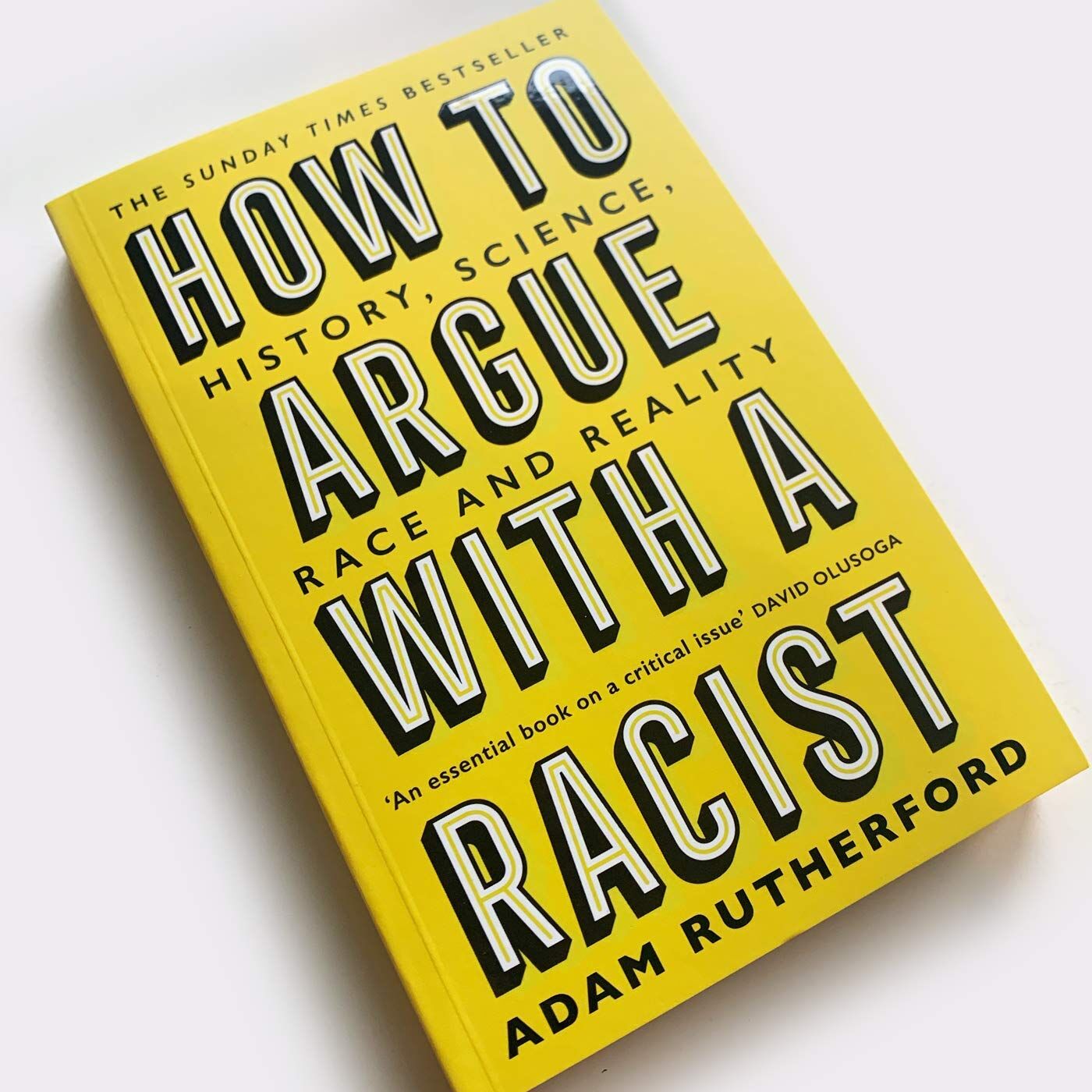
Orion How to Argue With a Racist by Adam Rutherford – Science, Race & Truth ExplainedRacist pseudoscience may be on the rise, but science is no ally to racists. Instead science and history can be powerful allies against bigotry, granting us the clearest view of how people actually are, rather than how we judge them to be. HOW TO ARGUE WITH A RACIST dismantles outdated notions of race by illuminating what modern genetics can and can't tell us about human difference. It is a vital manifesto for a twenty-first century understanding of human evolution and variation, and a timely weapon against the misuse of science to justify racism.3,99 £*Shipping: 1,99 £Secure redirect to the provider
-
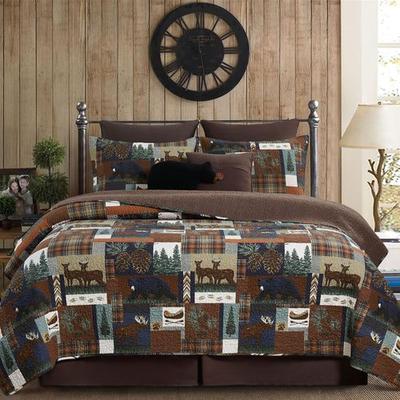
C & F Enterprises (Drop Ship) Rutherford Breeze Mini Quilt Set Multi Warm, King, Multi WarmThe Rutherford Breeze Bedding embraces the delights found within the rustic backwoods. The Mini Quilt Set includes a quilt and sham(s). With a patchwork look, the printed cotton bedding features deer, bears, moose, canoes, pine trees, animal tracks,...160,00 $*Shipping: 0,00 $Secure redirect to the provider


-
What is the Rutherford-Bohr model?
The Rutherford-Bohr model is a model of the atom proposed by Niels Bohr in 1913, building upon Ernest Rutherford's discovery of the atomic nucleus. In this model, electrons orbit the nucleus in specific energy levels or shells, rather than moving in random paths. These energy levels are quantized, meaning electrons can only occupy certain discrete energy levels. The model successfully explained the spectral lines of hydrogen and provided a more accurate description of the structure of the atom compared to previous models. **
-
What is the Rutherford scattering experiment?
The Rutherford scattering experiment was conducted by physicist Ernest Rutherford in 1909. In this experiment, Rutherford bombarded a thin gold foil with alpha particles and observed their scattering patterns. The unexpected results of the experiment led to the discovery of the atomic nucleus and the development of the nuclear model of the atom. The experiment showed that most of the alpha particles passed through the foil, but some were deflected at large angles, indicating the presence of a small, dense nucleus within the atom. This experiment revolutionized our understanding of the structure of the atom. **
-
What is the Rutherford scattering with copper?
Rutherford scattering with copper refers to the experiment conducted by Ernest Rutherford in which he bombarded a thin gold foil with alpha particles. The experiment led to the discovery that atoms have a small, dense nucleus at their center, which was a groundbreaking finding in the field of nuclear physics. The use of copper in the experiment is not common, as gold was the metal foil typically used due to its malleability and ability to be made very thin. **
-
What was the Rutherford gold foil experiment?
The Rutherford gold foil experiment was a landmark experiment conducted by physicist Ernest Rutherford in 1909. In the experiment, Rutherford and his team bombarded a thin sheet of gold foil with alpha particles and observed their scattering patterns. The results of the experiment led to the discovery of the atomic nucleus and the development of the nuclear model of the atom. This experiment provided crucial evidence that atoms have a small, dense, positively charged nucleus at their center, with electrons orbiting around it. **


Why did Rutherford use the gold foil?
Rutherford used gold foil in his famous experiment to study the structure of the atom because gold is a very malleable and ductile metal, which means it can be hammered into very thin sheets. This allowed Rutherford to create a very thin foil that he could use to bombard with alpha particles. By using gold foil, Rutherford was able to observe the scattering of alpha particles and make significant discoveries about the structure of the atom, leading to the development of the nuclear model of the atom. **
Can you please help me quickly with Rutherford chemistry?
Of course! I'd be happy to help with any questions you have about Rutherford chemistry. Rutherford chemistry refers to the study of the atomic structure and behavior of elements, based on the discoveries and theories proposed by physicist Ernest Rutherford. If you have specific questions or topics you'd like to discuss, feel free to ask and I'll do my best to assist you. **
Top-Angebote
Products related to Rutherford:
-
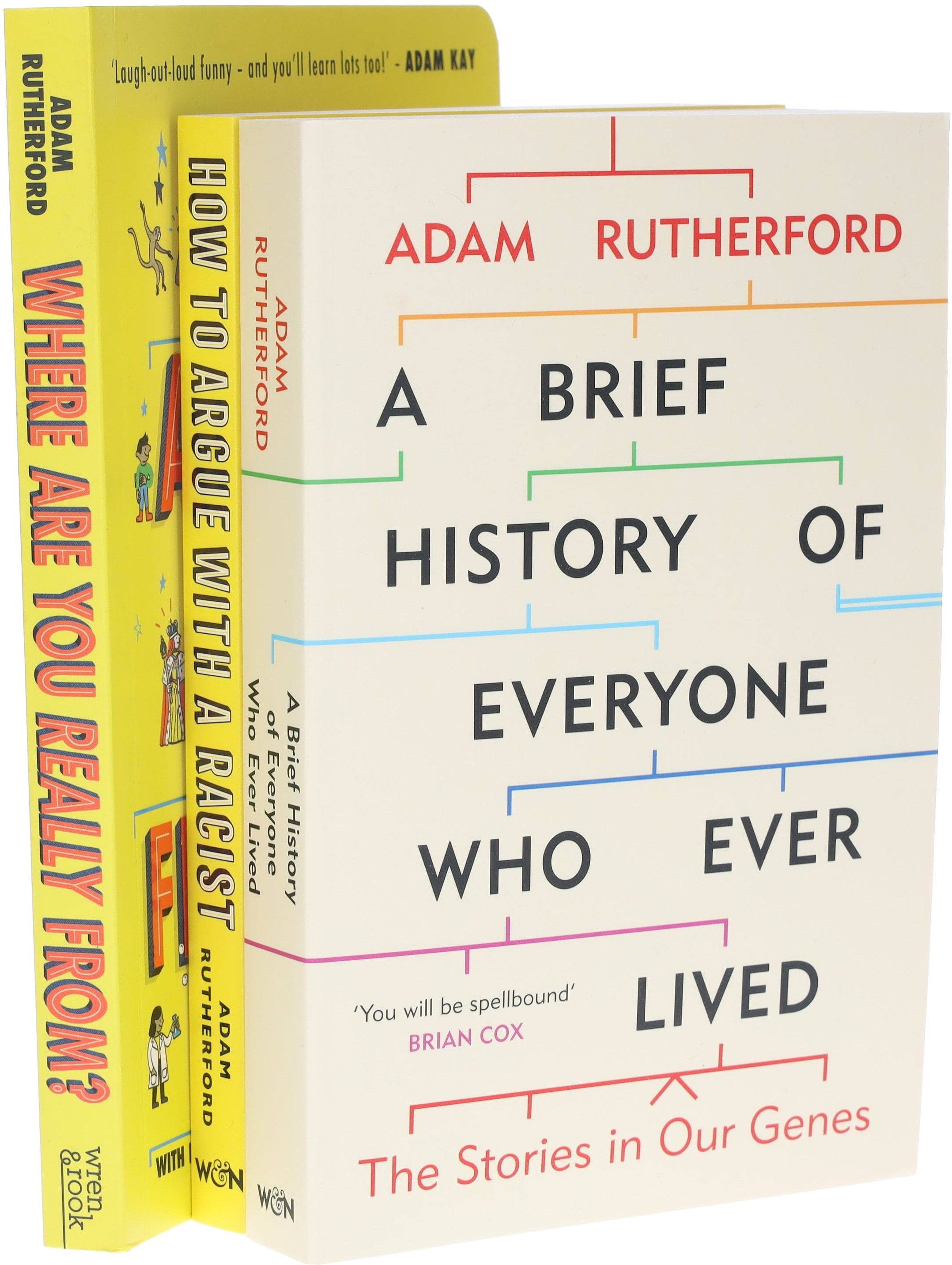
Adam Rutherford 3 Books Collection Set - Non Fiction - Paperback HachetteTitles in this set: 1. A Brief History of Everyone Who Ever Lived 2. How to Argue With a Racist 3. Where Are You Really From? Description A Brief History of Everyone Who Ever Lived This is a story about you. It is the history of who you are and how you came to be. It is unique to you, as it is to each of the 100 billion modern humans who have ever drawn breath. But it is also our collective story, because in every one of our genomes we each carry the history of our species - births, deaths, disease, war, famine, migration and a lot of sex. In this captivating journey through the expanding landscape of genetics, Adam Rutherford reveals what our genes now tell us about human history, and what history can now tell us about our genes. From Neanderthals to murder, from redheads to race, dead kings to plague, evolution to epigenetics, this is a demystifying and illuminating new portrait of who we are and how we came to be. How to Argue With a Racist Racist pseudoscience may be on the rise, but science is no ally to racists. Instead science and history can be powerful allies against bigotry, granting us the clearest view of how people actually are, rather than how we judge them to be. HOW TO ARGUE WITH A RACIST dismantles outdated notions of race by illuminating what modern genetics can and can't tell us about human difference. It is a vital manifesto for a twenty-first century understanding of human evolution and variation, and a timely weapon against the misuse of science to justify racism. Where Are You Really From? Go on an extraordinary adventure through millions of years of human history and learn the story of our species from evolution to dinosaurs to YOU! Along the way, you will meet kings and queens, Pharaohs and Vikings, and see just how far and wide humans have migrated around the world. You'll discover why we're related to a super cheesy man and that no matter what skin colour you have, language you speak or place you are from - we all share the same small pool of ancestors. Mind-boggling, entertaining and illuminating, this is the epic story of you and everyone who has ever lived!17,99 £*Shipping: 2,99 £Secure redirect to the provider
-
Rutherford and Fry’s Complete Guide to Absolutely Everything by Hannah FryDescription. THE SUNDAY TIMES BESTSELLER. 'Explores just about every area of life' DAILY MAIL. 'If only Adam Rutherford and Hannah Fry were on tap to all of us, all the time . . . The pair have such a gift for making life, numbers and the forces at work in the universe all the richer, stranger, funnier and more marvellous.' Stephen Fry. In Rutherford and Fry's comprehensive guidebook, they tell the complete story of the universe and absolutely everything in it - skipping over some of the boring parts.. This is a celebration of the weirdness of the cosmos, the strangeness of humans and the fact that amid all the mess, we can somehow make sense of life.. Title. Rutherford and Fry’s Complete Guide to Absolutely Everything by Hannah Fry. Delivery. Content. Reviews99,99 £*Shipping: 0,00 £Secure redirect to the provider
-
Adam Rutherford How to Argue With a Racist: History, Science, Race - Non Fiction - HardbackTitle:. How to Argue With a Racist: History, Science, Race and Reality Condition: BRAND NEW. Format: Hardcover Overview:. Race is widely perceived as a real category, but the book’s core argument is that race is a social construct while racism remains a tangible and dangerous force in society. Adam Rutherford guides readers through a rigorous tour of history, genetics, and contemporary culture to show why attempts to anchor human difference in biology are scientifically unfounded and ethically harmful. This book equips readers with clear, evidence-based explanations of how human genetic variation actually works, how populations are related, and why modern science rejects fixed racial hierarchies. It also dissects the seductive but misleading uses of data in public debates about migration, education, intelligence, and sport. Written for curious readers and students alike, the author translates complex genetics into accessible, concrete examples drawn from real-world situations, helping readers recognize pseudoscience, debunk stereotypes, and engage in constructive dialogue. The hardcover edition presents a concise, readable companion for classrooms, book clubs, or thoughtful conversations on social media, making this a vital resource in the ongoing fight against racial prejudice. What Makes This Book Stand Out:. Adam Rutherford blends a historian’s perspective with a geneticist’s precision to illuminate why race as a biological category never stood up to scrutiny, and why racism persists despite that truth. What distinguishes this work is its dual clarity and courage: it not only unpacks the science behind human diversity but also analyzes the social forces that weaponize that science to justify discrimination. Rutherford’s approach is decidedly practical—he offers approachable explanations of population genetics, discusses how data can be misinterpreted, and provides ready-to-use arguments for conversations with skeptical friends, students, or readers online. He also foregrounds the ethics of scientific communication, urging readers to demand evidence, question assumptions, and separate human value from statistical variation. This is more than a textbook; it’s a persuasive, timely guide for anyone who wants to challenge racism with intellectual honesty and empathy. Who This Book Is Perfect For:. If you’re curious about how science intersects with social justice, this book is for you. It’s ideal for students, educators, journalists, and anyone engaging in public debates about race, genetics, and identity. Parents and caregivers will value the accessible explanations that help explain difficult topics to younger readers, while book clubs and discussion groups will find ample material for thoughtful conversation. Perfect for readers who enjoy science communication, history-informed analysis, and debates about policy and culture, it also works well for BookTok and other communities seeking credible, engaging material that supports informed,...99,99 £*Shipping: 0,00 £Secure redirect to the provider
-
Spooky Lakes & Spooky Rivers 2 Books Collection Set By Geo Rutherford - Non Fiction - HardcoverTitles in This Set:. Spooky Lakes. Spooky Rivers Condition: Brand New. Format: Hardcover. ISBN: 9789124028633 Overview:. Introducing the Haunted Hydrology Series, a captivating two-book hardcover collection that blends non-fiction fact with atmospheric storytelling. Authored by Geo Rutherford, creator of the viral phenomenon Spooky Lake Month, this set dives deep into the mysterious side of Earth’s most enigmatic waterways. Packed with researched content and striking full-colour watercolour artwork, the volumes explore twenty-five haunted lakes and twenty-five legendary rivers from across the globe. Rather than relying on fleeting trends, each page delivers fascinating geological history, scientific anomalies, and cultural legends tied to dangerous bodies of water. Purchasing this curated set offers readers an immersive exploration of nature’s hidden dangers, presented in a beautifully designed format that demands attention. Owning both volumes together ensures you do not miss a single thread connecting these watery mysteries. What Makes This Collection Special:. What truly sets this dual volume set apart is its seamless fusion of education and eerie atmosphere. Each book operates as a standalone journey, yet functions brilliantly when read side by side. As readers move from submerged secrets in isolated pools to the treacherous currents of world-famous river systems, a consistent theme emerges: water holds memories we rarely acknowledge. The inclusion of hand-drawn illustrations elevates the material far beyond a standard textbook. Furthermore, the books tackle timely environmental concerns, highlighting how climate change threatens these very waterways while preserving their mythological roots. This approach makes the collection highly collectible. The hardcover binding guarantees durability, while the companion nature encourages effortless binge-reading. Books Included in This Collection:. Spooky Lakes. Step beneath the glassy surface to discover twenty-five of the planet’s most unsettling freshwater bodies. From mirror-flat crater lakes hiding ancient volcanic vents to turquoise pools that plunge into deadly underwater caverns, each entry uncovers the strange geology and regional folklore attached to it. Backed by rigorous research, this volume explains why certain waters appear calm while concealing turbulent depths or unexpected chemical reactions. Readers will encounter bizarre ecological adaptations, unexplained acoustic echoes, and historical disappearances tied to remote reservoirs. Lush colour paintings accompany every chapter, transforming obscure lake geography into a compelling narrative about the quiet power resting below the shoreline. Spooky Rivers. Trace the winding paths of twenty-five infamous waterways through centuries of human history and natural upheaval. This companion volume explores how rivers shape cultures, trigger environmental catastrophes, and inspire terrifying local myths. Discover why certain channels shift...99,99 £*Shipping: 0,00 £Secure redirect to the provider
-
What material did Rutherford need?
Rutherford needed a material that was very thin and could be easily penetrated by alpha particles. He used gold foil because it could be hammered into extremely thin sheets, just a few atoms thick. This allowed the alpha particles to pass through the foil and be detected on the other side, which was crucial for his experiment to study the structure of the atom. **
-
What is the Rutherford nuclear model?
The Rutherford nuclear model, proposed by physicist Ernest Rutherford in 1911, describes the structure of an atom as a small, dense, positively charged nucleus at the center, surrounded by negatively charged electrons orbiting around it. This model was based on the results of Rutherford's famous gold foil experiment, which showed that most of the alpha particles passed through the foil undeflected, but some were deflected at large angles, indicating the presence of a small, dense nucleus. The Rutherford model laid the foundation for our modern understanding of the atomic structure and the development of the atomic theory. **
-
What is the Rutherford-Bohr model?
The Rutherford-Bohr model is a model of the atom proposed by Niels Bohr in 1913, building upon Ernest Rutherford's discovery of the atomic nucleus. In this model, electrons orbit the nucleus in specific energy levels or shells, rather than moving in random paths. These energy levels are quantized, meaning electrons can only occupy certain discrete energy levels. The model successfully explained the spectral lines of hydrogen and provided a more accurate description of the structure of the atom compared to previous models. **
-
What is the Rutherford scattering experiment?
The Rutherford scattering experiment was conducted by physicist Ernest Rutherford in 1909. In this experiment, Rutherford bombarded a thin gold foil with alpha particles and observed their scattering patterns. The unexpected results of the experiment led to the discovery of the atomic nucleus and the development of the nuclear model of the atom. The experiment showed that most of the alpha particles passed through the foil, but some were deflected at large angles, indicating the presence of a small, dense nucleus within the atom. This experiment revolutionized our understanding of the structure of the atom. **
Similar search terms for Rutherford
-
Orion How to Argue With a Racist by Adam Rutherford – Science, Race & Truth ExplainedRacist pseudoscience may be on the rise, but science is no ally to racists. Instead science and history can be powerful allies against bigotry, granting us the clearest view of how people actually are, rather than how we judge them to be. HOW TO ARGUE WITH A RACIST dismantles outdated notions of race by illuminating what modern genetics can and can't tell us about human difference. It is a vital manifesto for a twenty-first century understanding of human evolution and variation, and a timely weapon against the misuse of science to justify racism.3,99 £*Shipping: 1,99 £Secure redirect to the provider
-
C & F Enterprises (Drop Ship) Rutherford Breeze Mini Quilt Set Multi Warm, King, Multi WarmThe Rutherford Breeze Bedding embraces the delights found within the rustic backwoods. The Mini Quilt Set includes a quilt and sham(s). With a patchwork look, the printed cotton bedding features deer, bears, moose, canoes, pine trees, animal tracks,...160,00 $*Shipping: 0,00 $Secure redirect to the provider
-
Adam Rutherford How to Argue with a Racist: History, Science, Race and Reality - Non Fiction - PaperbackTitle:. How to Argue With a Racist: History, Science, Race and Reality Condition: BRAND NEW. Format: Paperback Overview:. This timely non-fiction explores how to challenge racist ideas by rooting discussion in history and robust science. How to Argue With a Racist examines how the concept of race has evolved across centuries and why biology does not support racial hierarchies. Adam Rutherford, a British geneticist and science communicator, guides readers through the evolving study of human variation, showing that genetic differences between populations are small and do not justify sweeping claims about intelligence, behavior, or worth. The book connects these ideas to real-world conversations—politics, migration, education, sport and beyond—demonstrating that misinformation about race can influence policy and everyday judgments. Rather than a dry treatise, the work offers practical, accessible reasoning: clear talking points, verification tricks, and thoughtful, respectful responses that dismantle pseudoscience without resorting to hostility. It aims to empower readers to think critically, respond confidently, and protect vulnerable communities through informed dialogue. This is a indispensable guide for students, educators, parents, book clubs, and anyone who wants to participate in public debate with accuracy and empathy. What Makes This Book Stand Out:. Adam Rutherford brings the power of rigorous science to a pressing social issue with clarity and wit. The book blends history, anthropology, and genetics to debunk the notion of race as a biological reality, while tracing how race science has shaped policy and prejudice. Rutherford’s voice remains authoritative yet accessible, translating dense evidence into practical conclusions you can apply in conversations, classrooms, or online debate. The structure encourages reflection and dialogue, featuring concise explanations, concrete examples, and strategies for challenging misinformation without alienating listeners. It’s widely recognised as a timely antidote to racial pseudoscience, with notable reception that highlights its usefulness for data lovers, students, and anyone seeking to understand how science informs public discourse about race. The work has been celebrated for turning complex scientific ideas into a persuasive, constructive toolkit for everyday life. Who This Book Is Perfect For:. This book is ideal for curious readers who want a solid grasp of the science behind race and racism. It suits adults and older teens engaged with non-fiction, science, history, and social issues, as well as educators, students, librarians, and book clubs seeking evidence-based discussion material. If you’re preparing for debates, coursework, or policy conversations, this book provides a reliable foundation to counter misinformation with nuance and respect. It also makes a thoughtful gift for parents, science enthusiasts, and colleagues who want to engage constructively in conversations about bias,...99,99 £*Shipping: 0,00 £Secure redirect to the provider
-
CE Rose Collection 2 Books Set (The Shadows of Rutherford House, The Attic at Wilton Place)Description. The Shadows of Rutherford House:. In 1959 Milly starts her new life as a housemaid at Rutherford House, working for the aristocratic Rutherford-Percy clan. Entranced by her new mistress, Vivienne, she becomes deeply embroiled in the household and the keeper of dark secrets the family conceals beneath the mansion’s grand exterior. In the present day, Christie is working as a psychiatric nurse when she meets troubled patient Lillian Percy, Vivienne’s granddaughter and heiress to Rutherford House. They soon bond over the loss of their mothers – Lillian’s died when she was a child; Christie’s mysteriously disappeared over twenty years ago – and Christie finds herself increasingly fascinated by Lillian’s family and their imposing ancestral home.. The Attic at Wilton Place:. Introspective Ruth Parker is desperate for love and attention. Overlooked as a child by her cold and critical mother, her pain manifests in loneliness and a crippling lack of self-esteem. When glamorous actress ‘Aunt’ Vanessa, her mother’s childhood friend, shows an interest in her, Ruth basks in the blinding light of her attention. Once Ruth escapes to university in London, Aunt Vanessa invites her to Wilton Place, her stunning Belgravia residence. As she blossoms under Vanessa’s guidance, Ruth finds herself torn between student life and the hypnotic, luxurious confines of Wilton Place.. U24-D-3-04. Title. CE Rose Collection 2 Books Set (The Shadows of Rutherford House, The Attic at Wilton Place). Delivery. Content. Reviews99,99 £*Shipping: 0,00 £Secure redirect to the provider
-
What is the Rutherford scattering with copper?
Rutherford scattering with copper refers to the experiment conducted by Ernest Rutherford in which he bombarded a thin gold foil with alpha particles. The experiment led to the discovery that atoms have a small, dense nucleus at their center, which was a groundbreaking finding in the field of nuclear physics. The use of copper in the experiment is not common, as gold was the metal foil typically used due to its malleability and ability to be made very thin. **
-
What was the Rutherford gold foil experiment?
The Rutherford gold foil experiment was a landmark experiment conducted by physicist Ernest Rutherford in 1909. In the experiment, Rutherford and his team bombarded a thin sheet of gold foil with alpha particles and observed their scattering patterns. The results of the experiment led to the discovery of the atomic nucleus and the development of the nuclear model of the atom. This experiment provided crucial evidence that atoms have a small, dense, positively charged nucleus at their center, with electrons orbiting around it. **
-
Why did Rutherford use the gold foil?
Rutherford used gold foil in his famous experiment to study the structure of the atom because gold is a very malleable and ductile metal, which means it can be hammered into very thin sheets. This allowed Rutherford to create a very thin foil that he could use to bombard with alpha particles. By using gold foil, Rutherford was able to observe the scattering of alpha particles and make significant discoveries about the structure of the atom, leading to the development of the nuclear model of the atom. **
-
Can you please help me quickly with Rutherford chemistry?
Of course! I'd be happy to help with any questions you have about Rutherford chemistry. Rutherford chemistry refers to the study of the atomic structure and behavior of elements, based on the discoveries and theories proposed by physicist Ernest Rutherford. If you have specific questions or topics you'd like to discuss, feel free to ask and I'll do my best to assist you. **
* All prices are inclusive of VAT and, if applicable, plus shipping costs. The offer information is based on the details provided by the respective shop and is updated through automated processes. Real-time updates do not occur, so deviations can occur in individual cases. ** Note: Parts of this content were created by AI.