Buy baptisten.eu ?
We are moving the project
baptisten.eu .
Are you interested in purchasing the domain
baptisten.eu ?
domain@kv-gmbh.de · 0541-91531010
Buy baptisten.eu ?
Can you rearrange formulas?
Yes, formulas can be rearranged using algebraic manipulation. By applying the principles of algebra, such as adding, subtracting, multiplying, and dividing both sides of an equation, you can rearrange formulas to solve for a different variable or to express one variable in terms of others. This is a common technique used in mathematics and science to manipulate equations and solve for unknown quantities. **
How do you rearrange formulas?
To rearrange formulas, you can isolate the variable you want to solve for by performing inverse operations. Start by identifying the variable you want to solve for and then move all other terms to the other side of the equation. Use inverse operations such as addition, subtraction, multiplication, and division to simplify the equation and isolate the variable. Finally, solve for the variable by performing the necessary operations to get it by itself on one side of the equation. **

Similar search terms for Rearrange
Top-Angebote
Products related to Rearrange:
-
Nagdi Suleman Discovering Through Death - Beliefs and Practices - Non Fiction - PaperbackTitle:. Discovering Through Death - Beliefs and Practices Condition: BRAND NEW. Format: Paperback Overview:. Discovering Through Death - Beliefs and Practices invites readers into a thoughtful, interdisciplinary exploration of how cultures interpret mortality and mark farewell. This paperback offers clear, accessible prose that unwraps complex ideas without jargon. It examines why societies ritualize death, how mourning shapes communities, and how beliefs influence end-of-life decisions in everyday life. Spanning historical sources and contemporary practices, the book weaves anthropology, religious studies, psychology, and ethics to present a nuanced panorama of dying cultures around the world. Expect concise, well-structured chapters, each accompanied by key terms and reflective prompts that encourage personal engagement rather than passive reading. The author presents case studies—from quiet village rites to urban memorial ceremonies—to illuminate both universal themes and striking differences. For students, caregivers, nurses, clergy, and curious readers, this guide offers practical insights: how rituals provide meaning, how conversations about death improve care, and how to approach sensitive topics with respect. The tone is scholarly yet approachable, never sensational, inviting readers to examine their own beliefs while building empathy for others. Design elements such as boxed sidebars, glossary terms, and reading prompts make it an ideal companion for coursework, reading groups, or solo study. By the final chapter, you’ll have a framework for understanding death not as a distant incident, but as a deeply human process that unites us across cultures. What Makes This Book Stand Out:. Unlike many introductions, Discovering Through Death grounds theory in everyday practice. The author threads cross-cultural comparisons with accessible explanations of ritual meanings, grief processes, and ethical questions around death and dying. It is not a sterile survey; it invites readers to consider how beliefs inform caregiving, policy, and personal decisions. The inclusion of real-world case studies helps readers imagine themselves in different cultural contexts, while digestible summaries at the end of each chapter reinforce learning. A thoughtfully compiled glossary demystifies terms such as eschatology, ritual transition, and bereavement; sidebars offer quick takeaways for students, teachers, or busy professionals. The narrative pace balances curiosity with empathy, encouraging reflective reading and discussion. Whether you’re studying for a course, supporting someone at end of life, or simply seeking a broader understanding of mortality, this book provides a reliable, respectful lens that can be revisited chapter by chapter. Who This Book Is Perfect For:. Perfect for undergraduates and postgraduates studying anthropology, religious studies, sociology, or medical humanities; professionals in palliative care, nursing, social work, and chaplaincy;...99,99 £*Shipping: 0,00 £Secure redirect to the provider
-
Uplifted Finds Calculate Separate Pricing For These And Show Full Listing, Do Not Rearrange The Pricing: 30 X 30 X 5 PcsInaugurate a direct energy for your environment with this integrated maintenance solution. These nano ultrafiber towels serve as a functional choice for your spatial organizational journeys, offering a highdensity alternative to standard cleaning...63,97 $*Shipping: 0,00 $Secure redirect to the provider
-
Uplifted Finds Calculate Separate Pricing For These And Show Full Listing, Do Not Rearrange The Pricing: 30 X 30 X 15 PcsInaugurate a direct energy for your environment with this integrated maintenance solution. These nano ultrafiber towels serve as a functional choice for your spatial organizational journeys, offering a highdensity alternative to standard cleaning...131,97 $*Shipping: 0,00 $Secure redirect to the provider
-
Uplifted Finds Calculate Separate Pricing For These And Show Full Listing, Do Not Rearrange The Pricing: 30 X 60 X 10 PcsInaugurate a direct energy for your environment with this integrated maintenance solution. These nano ultrafiber towels serve as a functional choice for your spatial organizational journeys, offering a highdensity alternative to standard cleaning...144,97 $*Shipping: 0,00 $Secure redirect to the provider


-
How can one rearrange 4?
One can rearrange the number 4 by changing its position within a sequence of numbers or by using it in different mathematical operations. For example, 4 can be rearranged within a sequence of numbers such as 1, 2, 3, 4 to become 1, 3, 2, 4. Additionally, 4 can be used in various mathematical operations such as addition, subtraction, multiplication, and division to create different rearrangements and expressions. **
-
Can someone rearrange this equation?
Yes, someone can rearrange an equation by performing various algebraic operations such as adding, subtracting, multiplying, dividing, or taking square roots on both sides of the equation. The goal of rearranging an equation is to isolate the variable of interest on one side of the equation. This process allows for solving for the variable or expressing it in terms of other variables. **
-
Can someone rearrange these formulas?
Yes, someone can rearrange formulas by using algebraic manipulation to isolate the desired variable on one side of the equation. This can involve performing operations such as addition, subtraction, multiplication, and division to both sides of the equation in order to rearrange the formula to solve for a different variable. It is important to follow the rules of algebra and perform the same operation to both sides of the equation in order to maintain equality. **
-
Who can rearrange formulas well?
People who have a strong understanding of algebra and mathematical principles can rearrange formulas well. This skill is essential for solving complex equations and manipulating formulas to solve for different variables. Additionally, individuals with a good grasp of logical reasoning and problem-solving abilities are also likely to excel in rearranging formulas. Practice and experience with mathematical concepts also play a significant role in developing this skill. **


How can one rearrange the formula?
To rearrange a formula, you can isolate the variable you want to solve for by performing inverse operations. Start by identifying the variable you want to solve for and then move all other terms to the other side of the equation. Use inverse operations such as addition, subtraction, multiplication, and division to manipulate the equation until the variable is isolated on one side. Finally, simplify the equation to express the variable in terms of the other variables or constants in the formula. **
How can one rearrange a formula?
To rearrange a formula, one must isolate the variable they want to solve for by performing inverse operations. This involves moving terms to the other side of the equation by using addition, subtraction, multiplication, and division. By following the rules of algebra, one can manipulate the formula to express the desired variable on one side of the equation. It is important to perform the same operation on both sides of the equation to maintain its equality. **
Top-Angebote
Products related to Rearrange:
-
Uplifted Finds Calculate Separate Pricing For These And Show Full Listing, Do Not Rearrange The Pricing: 30 X 60 X 20 PcsInaugurate a direct energy for your environment with this integrated maintenance solution. These nano ultrafiber towels serve as a functional choice for your spatial organizational journeys, offering a highdensity alternative to standard cleaning...190,97 $*Shipping: 0,00 $Secure redirect to the provider
-
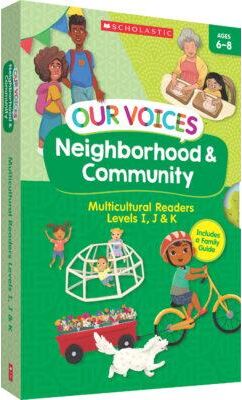
Our Voices: Neighborhood & Community Boxed SetFoster a feeling of belonging while building key reading skills with these colorful storybooks that spotlight a variety of neighborhoods and communities. The 10 charming stories feature characters from different cultural backgrounds who learn about...32,37 $*Shipping: 0,00 $Secure redirect to the provider
-
Nagdi Suleman Discovering Through Death - Beliefs and Practices - Non Fiction - PaperbackTitle:. Discovering Through Death - Beliefs and Practices Condition: BRAND NEW. Format: Paperback Overview:. Discovering Through Death - Beliefs and Practices invites readers into a thoughtful, interdisciplinary exploration of how cultures interpret mortality and mark farewell. This paperback offers clear, accessible prose that unwraps complex ideas without jargon. It examines why societies ritualize death, how mourning shapes communities, and how beliefs influence end-of-life decisions in everyday life. Spanning historical sources and contemporary practices, the book weaves anthropology, religious studies, psychology, and ethics to present a nuanced panorama of dying cultures around the world. Expect concise, well-structured chapters, each accompanied by key terms and reflective prompts that encourage personal engagement rather than passive reading. The author presents case studies—from quiet village rites to urban memorial ceremonies—to illuminate both universal themes and striking differences. For students, caregivers, nurses, clergy, and curious readers, this guide offers practical insights: how rituals provide meaning, how conversations about death improve care, and how to approach sensitive topics with respect. The tone is scholarly yet approachable, never sensational, inviting readers to examine their own beliefs while building empathy for others. Design elements such as boxed sidebars, glossary terms, and reading prompts make it an ideal companion for coursework, reading groups, or solo study. By the final chapter, you’ll have a framework for understanding death not as a distant incident, but as a deeply human process that unites us across cultures. What Makes This Book Stand Out:. Unlike many introductions, Discovering Through Death grounds theory in everyday practice. The author threads cross-cultural comparisons with accessible explanations of ritual meanings, grief processes, and ethical questions around death and dying. It is not a sterile survey; it invites readers to consider how beliefs inform caregiving, policy, and personal decisions. The inclusion of real-world case studies helps readers imagine themselves in different cultural contexts, while digestible summaries at the end of each chapter reinforce learning. A thoughtfully compiled glossary demystifies terms such as eschatology, ritual transition, and bereavement; sidebars offer quick takeaways for students, teachers, or busy professionals. The narrative pace balances curiosity with empathy, encouraging reflective reading and discussion. Whether you’re studying for a course, supporting someone at end of life, or simply seeking a broader understanding of mortality, this book provides a reliable, respectful lens that can be revisited chapter by chapter. Who This Book Is Perfect For:. Perfect for undergraduates and postgraduates studying anthropology, religious studies, sociology, or medical humanities; professionals in palliative care, nursing, social work, and chaplaincy;...99,99 £*Shipping: 0,00 £Secure redirect to the provider
-
Uplifted Finds Calculate Separate Pricing For These And Show Full Listing, Do Not Rearrange The Pricing: 30 X 30 X 5 PcsInaugurate a direct energy for your environment with this integrated maintenance solution. These nano ultrafiber towels serve as a functional choice for your spatial organizational journeys, offering a highdensity alternative to standard cleaning...63,97 $*Shipping: 0,00 $Secure redirect to the provider
-
Can you rearrange formulas?
Yes, formulas can be rearranged using algebraic manipulation. By applying the principles of algebra, such as adding, subtracting, multiplying, and dividing both sides of an equation, you can rearrange formulas to solve for a different variable or to express one variable in terms of others. This is a common technique used in mathematics and science to manipulate equations and solve for unknown quantities. **
-
How do you rearrange formulas?
To rearrange formulas, you can isolate the variable you want to solve for by performing inverse operations. Start by identifying the variable you want to solve for and then move all other terms to the other side of the equation. Use inverse operations such as addition, subtraction, multiplication, and division to simplify the equation and isolate the variable. Finally, solve for the variable by performing the necessary operations to get it by itself on one side of the equation. **
-
How can one rearrange 4?
One can rearrange the number 4 by changing its position within a sequence of numbers or by using it in different mathematical operations. For example, 4 can be rearranged within a sequence of numbers such as 1, 2, 3, 4 to become 1, 3, 2, 4. Additionally, 4 can be used in various mathematical operations such as addition, subtraction, multiplication, and division to create different rearrangements and expressions. **
-
Can someone rearrange this equation?
Yes, someone can rearrange an equation by performing various algebraic operations such as adding, subtracting, multiplying, dividing, or taking square roots on both sides of the equation. The goal of rearranging an equation is to isolate the variable of interest on one side of the equation. This process allows for solving for the variable or expressing it in terms of other variables. **
Similar search terms for Rearrange
-
Uplifted Finds Calculate Separate Pricing For These And Show Full Listing, Do Not Rearrange The Pricing: 30 X 30 X 15 PcsInaugurate a direct energy for your environment with this integrated maintenance solution. These nano ultrafiber towels serve as a functional choice for your spatial organizational journeys, offering a highdensity alternative to standard cleaning...131,97 $*Shipping: 0,00 $Secure redirect to the provider
-
Uplifted Finds Calculate Separate Pricing For These And Show Full Listing, Do Not Rearrange The Pricing: 30 X 60 X 10 PcsInaugurate a direct energy for your environment with this integrated maintenance solution. These nano ultrafiber towels serve as a functional choice for your spatial organizational journeys, offering a highdensity alternative to standard cleaning...144,97 $*Shipping: 0,00 $Secure redirect to the provider
-
Uplifted Finds Calculate Separate Pricing For These And Show Full Listing, Do Not Rearrange The Pricing: 30 X 60 X 5 PcsInaugurate a direct energy for your environment with this integrated maintenance solution. These nano ultrafiber towels serve as a functional choice for your spatial organizational journeys, offering a highdensity alternative to standard cleaning...88,97 $*Shipping: 0,00 $Secure redirect to the provider
-
Uplifted Finds Calculate Separate Pricing For These And Show Full Listing, Do Not Rearrange The Pricing: 30 X 60 X 15 PcsInaugurate a direct energy for your environment with this integrated maintenance solution. These nano ultrafiber towels serve as a functional choice for your spatial organizational journeys, offering a highdensity alternative to standard cleaning...157,97 $*Shipping: 0,00 $Secure redirect to the provider
-
Can someone rearrange these formulas?
Yes, someone can rearrange formulas by using algebraic manipulation to isolate the desired variable on one side of the equation. This can involve performing operations such as addition, subtraction, multiplication, and division to both sides of the equation in order to rearrange the formula to solve for a different variable. It is important to follow the rules of algebra and perform the same operation to both sides of the equation in order to maintain equality. **
-
Who can rearrange formulas well?
People who have a strong understanding of algebra and mathematical principles can rearrange formulas well. This skill is essential for solving complex equations and manipulating formulas to solve for different variables. Additionally, individuals with a good grasp of logical reasoning and problem-solving abilities are also likely to excel in rearranging formulas. Practice and experience with mathematical concepts also play a significant role in developing this skill. **
-
How can one rearrange the formula?
To rearrange a formula, you can isolate the variable you want to solve for by performing inverse operations. Start by identifying the variable you want to solve for and then move all other terms to the other side of the equation. Use inverse operations such as addition, subtraction, multiplication, and division to manipulate the equation until the variable is isolated on one side. Finally, simplify the equation to express the variable in terms of the other variables or constants in the formula. **
-
How can one rearrange a formula?
To rearrange a formula, one must isolate the variable they want to solve for by performing inverse operations. This involves moving terms to the other side of the equation by using addition, subtraction, multiplication, and division. By following the rules of algebra, one can manipulate the formula to express the desired variable on one side of the equation. It is important to perform the same operation on both sides of the equation to maintain its equality. **
* All prices are inclusive of VAT and, if applicable, plus shipping costs. The offer information is based on the details provided by the respective shop and is updated through automated processes. Real-time updates do not occur, so deviations can occur in individual cases. ** Note: Parts of this content were created by AI.