Buy baptisten.eu ?
We are moving the project
baptisten.eu .
Are you interested in purchasing the domain
baptisten.eu ?
domain@kv-gmbh.de · 0541-91531010
Buy baptisten.eu ?
Should one do scalar multiplication or cross multiplication first?
One should do scalar multiplication first before cross multiplication. Scalar multiplication involves multiplying a scalar (a single number) by each component of a vector, while cross multiplication involves finding the cross product of two vectors. By performing scalar multiplication first, you scale the vector appropriately before applying the cross product operation, ensuring the correct magnitude and direction of the resulting vector. **
How is the multiplication of complex numbers done using vector multiplication?
The multiplication of complex numbers can be done using vector multiplication by representing each complex number as a 2D vector in the form (a, b) where a is the real part and b is the imaginary part. Then, the multiplication of two complex numbers can be done by using the rules of vector multiplication, where the real part of the product is the dot product of the two vectors and the imaginary part is the cross product of the two vectors. This method allows us to perform complex number multiplication using the properties of vector operations. **


Similar search terms for Multiplication
Top-Angebote
Products related to Multiplication:
-
Uplift Picks Wooden Montessori Multiplication Table Toy Kids Math Learning Board With Sliding Tiles Wooden Montessori Multiplication Table Toy Kids Math Learning Board With Sliding TilesMake learning math fun, interactive, and engaging for your child. This handson board is designed to help kids understand multiplication through play and repetition. With its sliding tile design, children can explore numbers at their own pace while...43,99 $*Shipping: 0,00 $Secure redirect to the provider
-
Uplift Essentials Wooden Slidable Multiplication Board Montessori Math Learning Tool High Yield Educational Interaction Hub Wooden Slidable Multiplication Board Montessori Math Learning Tool High Yield Educational Interaction HubAchieve cognitive optimization with this Precision Slidable Multiplication Table. Specifically engineered for mathematical transparency, this highperformance technical tool acts as a vital tool for logic efficiency, neutralizing the limitations of...58,97 $*Shipping: 0,00 $Secure redirect to the provider
-
Inspired Living 2 in 1 Math Roller Stamp Within 100 Refillable Fill in the Blank Practice Tool multiplicationTurn math drills into quick wins your child can feel proud of. This math roller stamp creates instant problems within 100so kids can practice more, stress less, and build real confidence. Designed for parents, teachers, and homeschoolers, its a...43,97 $*Shipping: 0,00 $Secure redirect to the provider
-
Inspire Picks 2 in 1 Reusable Math Roller Stamp Fill in the Blank Teaching Stamp For Numbers Within 100 multiplicationTurn daily math practice into something kids actually enjoy. This math roller stamp makes learning numbers within 100 interactive, visual, and fun by combining fillintheblank exercises with an easytouse rolling design. One smooth roll creates clear...56,35 $*Shipping: 0,00 $Secure redirect to the provider


-
What happens during multiplication?
During multiplication, two or more numbers are combined to find their total value. The number being multiplied is called the multiplicand, and the number by which it is multiplied is called the multiplier. The result of the multiplication is called the product. For example, when you multiply 3 by 4, you are combining 3 groups of 4 to find the total, which is 12. Multiplication is essentially a shortcut for repeated addition, and it allows us to quickly find the total value of a given number of groups or items. **
-
What is the multiplication coefficient?
The multiplication coefficient is a number that represents the factor by which a quantity is multiplied. It is used to scale or increase the value of a quantity by a certain amount. For example, if the multiplication coefficient is 2, then the quantity is doubled. The multiplication coefficient is often used in mathematical equations and calculations to represent the relationship between different quantities. **
-
Who invented the multiplication table?
The multiplication table is believed to have been invented by the ancient Babylonians around 4,000 years ago. They were the first to develop a systematic approach to multiplication and created tables to aid in calculations. The concept of a multiplication table has since been refined and expanded upon by mathematicians throughout history, but its origins can be traced back to the ancient Babylonians. **
-
How does matrix multiplication work?
Matrix multiplication is a process where two matrices are multiplied to produce a new matrix. The resulting matrix's elements are calculated by taking the dot product of the corresponding row from the first matrix and the corresponding column from the second matrix. This means that the number of columns in the first matrix must be equal to the number of rows in the second matrix for the multiplication to be possible. The resulting matrix will have the same number of rows as the first matrix and the same number of columns as the second matrix. Matrix multiplication is not commutative, meaning that the order in which the matrices are multiplied matters. **

Which comes first, division or multiplication?
In the order of operations, multiplication comes before division. This means that when solving an expression that contains both multiplication and division, you should perform the multiplication first before moving on to division. Following the correct order of operations ensures that you arrive at the correct answer. **
What comes first, division or multiplication?
In the order of operations, multiplication comes before division. This means that when solving a mathematical expression that contains both multiplication and division, you should perform the multiplication first before moving on to the division. It is important to follow the order of operations to ensure the correct result. **
Top-Angebote
Products related to Multiplication:
-
Inspire Essentials Wooden Montessori Multiplication Learning Board Wooden Montessori Multiplication Learning BoardMake learning math more fun and interactive with this engaging Montessori math toy designed to help children build confidence in multiplication and counting skills through hands on play. Featuring a wooden sliding multiplication board, this...54,48 $*Shipping: 0,00 $Secure redirect to the provider
-
Uplift Treasures Wooden Montessori Multiplication Board Learning Toy Wooden Montessori Multiplication Board Learning ToyProduct Description: Make math fun and engaging with this Montessori wooden multiplication board. Designed to help children easily understand numbers through handson learning, it transforms multiplication into an interactive and enjoyable activity...57,97 $*Shipping: 0,00 $Secure redirect to the provider
-
Uplift Picks Wooden Montessori Multiplication Table Toy Kids Math Learning Board With Sliding Tiles Wooden Montessori Multiplication Table Toy Kids Math Learning Board With Sliding TilesMake learning math fun, interactive, and engaging for your child. This handson board is designed to help kids understand multiplication through play and repetition. With its sliding tile design, children can explore numbers at their own pace while...43,99 $*Shipping: 0,00 $Secure redirect to the provider
-
Uplift Essentials Wooden Slidable Multiplication Board Montessori Math Learning Tool High Yield Educational Interaction Hub Wooden Slidable Multiplication Board Montessori Math Learning Tool High Yield Educational Interaction HubAchieve cognitive optimization with this Precision Slidable Multiplication Table. Specifically engineered for mathematical transparency, this highperformance technical tool acts as a vital tool for logic efficiency, neutralizing the limitations of...58,97 $*Shipping: 0,00 $Secure redirect to the provider
-
Should one do scalar multiplication or cross multiplication first?
One should do scalar multiplication first before cross multiplication. Scalar multiplication involves multiplying a scalar (a single number) by each component of a vector, while cross multiplication involves finding the cross product of two vectors. By performing scalar multiplication first, you scale the vector appropriately before applying the cross product operation, ensuring the correct magnitude and direction of the resulting vector. **
-
How is the multiplication of complex numbers done using vector multiplication?
The multiplication of complex numbers can be done using vector multiplication by representing each complex number as a 2D vector in the form (a, b) where a is the real part and b is the imaginary part. Then, the multiplication of two complex numbers can be done by using the rules of vector multiplication, where the real part of the product is the dot product of the two vectors and the imaginary part is the cross product of the two vectors. This method allows us to perform complex number multiplication using the properties of vector operations. **
-
What happens during multiplication?
During multiplication, two or more numbers are combined to find their total value. The number being multiplied is called the multiplicand, and the number by which it is multiplied is called the multiplier. The result of the multiplication is called the product. For example, when you multiply 3 by 4, you are combining 3 groups of 4 to find the total, which is 12. Multiplication is essentially a shortcut for repeated addition, and it allows us to quickly find the total value of a given number of groups or items. **
-
What is the multiplication coefficient?
The multiplication coefficient is a number that represents the factor by which a quantity is multiplied. It is used to scale or increase the value of a quantity by a certain amount. For example, if the multiplication coefficient is 2, then the quantity is doubled. The multiplication coefficient is often used in mathematical equations and calculations to represent the relationship between different quantities. **
Similar search terms for Multiplication
-
Inspired Living 2 in 1 Math Roller Stamp Within 100 Refillable Fill in the Blank Practice Tool multiplicationTurn math drills into quick wins your child can feel proud of. This math roller stamp creates instant problems within 100so kids can practice more, stress less, and build real confidence. Designed for parents, teachers, and homeschoolers, its a...43,97 $*Shipping: 0,00 $Secure redirect to the provider
-
Inspire Picks 2 in 1 Reusable Math Roller Stamp Fill in the Blank Teaching Stamp For Numbers Within 100 multiplicationTurn daily math practice into something kids actually enjoy. This math roller stamp makes learning numbers within 100 interactive, visual, and fun by combining fillintheblank exercises with an easytouse rolling design. One smooth roll creates clear...56,35 $*Shipping: 0,00 $Secure redirect to the provider
-
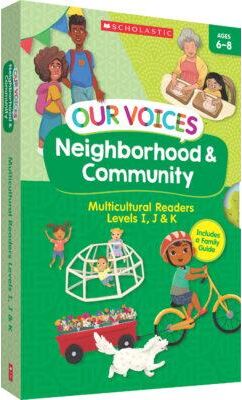
Our Voices: Neighborhood & Community Boxed SetFoster a feeling of belonging while building key reading skills with these colorful storybooks that spotlight a variety of neighborhoods and communities. The 10 charming stories feature characters from different cultural backgrounds who learn about...32,37 $*Shipping: 0,00 $Secure redirect to the provider
-
Nagdi Suleman Discovering Through Death - Beliefs and Practices - Non Fiction - PaperbackTitle:. Discovering Through Death - Beliefs and Practices Condition: BRAND NEW. Format: Paperback Overview:. Discovering Through Death - Beliefs and Practices invites readers into a thoughtful, interdisciplinary exploration of how cultures interpret mortality and mark farewell. This paperback offers clear, accessible prose that unwraps complex ideas without jargon. It examines why societies ritualize death, how mourning shapes communities, and how beliefs influence end-of-life decisions in everyday life. Spanning historical sources and contemporary practices, the book weaves anthropology, religious studies, psychology, and ethics to present a nuanced panorama of dying cultures around the world. Expect concise, well-structured chapters, each accompanied by key terms and reflective prompts that encourage personal engagement rather than passive reading. The author presents case studies—from quiet village rites to urban memorial ceremonies—to illuminate both universal themes and striking differences. For students, caregivers, nurses, clergy, and curious readers, this guide offers practical insights: how rituals provide meaning, how conversations about death improve care, and how to approach sensitive topics with respect. The tone is scholarly yet approachable, never sensational, inviting readers to examine their own beliefs while building empathy for others. Design elements such as boxed sidebars, glossary terms, and reading prompts make it an ideal companion for coursework, reading groups, or solo study. By the final chapter, you’ll have a framework for understanding death not as a distant incident, but as a deeply human process that unites us across cultures. What Makes This Book Stand Out:. Unlike many introductions, Discovering Through Death grounds theory in everyday practice. The author threads cross-cultural comparisons with accessible explanations of ritual meanings, grief processes, and ethical questions around death and dying. It is not a sterile survey; it invites readers to consider how beliefs inform caregiving, policy, and personal decisions. The inclusion of real-world case studies helps readers imagine themselves in different cultural contexts, while digestible summaries at the end of each chapter reinforce learning. A thoughtfully compiled glossary demystifies terms such as eschatology, ritual transition, and bereavement; sidebars offer quick takeaways for students, teachers, or busy professionals. The narrative pace balances curiosity with empathy, encouraging reflective reading and discussion. Whether you’re studying for a course, supporting someone at end of life, or simply seeking a broader understanding of mortality, this book provides a reliable, respectful lens that can be revisited chapter by chapter. Who This Book Is Perfect For:. Perfect for undergraduates and postgraduates studying anthropology, religious studies, sociology, or medical humanities; professionals in palliative care, nursing, social work, and chaplaincy;...99,99 £*Shipping: 0,00 £Secure redirect to the provider
-
Who invented the multiplication table?
The multiplication table is believed to have been invented by the ancient Babylonians around 4,000 years ago. They were the first to develop a systematic approach to multiplication and created tables to aid in calculations. The concept of a multiplication table has since been refined and expanded upon by mathematicians throughout history, but its origins can be traced back to the ancient Babylonians. **
-
How does matrix multiplication work?
Matrix multiplication is a process where two matrices are multiplied to produce a new matrix. The resulting matrix's elements are calculated by taking the dot product of the corresponding row from the first matrix and the corresponding column from the second matrix. This means that the number of columns in the first matrix must be equal to the number of rows in the second matrix for the multiplication to be possible. The resulting matrix will have the same number of rows as the first matrix and the same number of columns as the second matrix. Matrix multiplication is not commutative, meaning that the order in which the matrices are multiplied matters. **
-
Which comes first, division or multiplication?
In the order of operations, multiplication comes before division. This means that when solving an expression that contains both multiplication and division, you should perform the multiplication first before moving on to division. Following the correct order of operations ensures that you arrive at the correct answer. **
-
What comes first, division or multiplication?
In the order of operations, multiplication comes before division. This means that when solving a mathematical expression that contains both multiplication and division, you should perform the multiplication first before moving on to the division. It is important to follow the order of operations to ensure the correct result. **
* All prices are inclusive of VAT and, if applicable, plus shipping costs. The offer information is based on the details provided by the respective shop and is updated through automated processes. Real-time updates do not occur, so deviations can occur in individual cases. ** Note: Parts of this content were created by AI.