Buy baptisten.eu ?
We are moving the project
baptisten.eu .
Are you interested in purchasing the domain
baptisten.eu ?
domain@kv-gmbh.de · 0541-91531010
Buy baptisten.eu ?
'Salts or molecules?'
Salts are compounds formed from the reaction of an acid and a base, while molecules are made up of atoms bonded together. Salts are ionic compounds, meaning they are made up of ions, while molecules can be either ionic or covalent compounds. Salts have a specific crystalline structure and are often soluble in water, while molecules can have a wide range of physical properties and solubilities. Overall, salts and molecules are distinct types of chemical compounds with different structures and properties. **
Which of the following molecules are dipole molecules and why?
Molecules that have a dipole moment are considered dipole molecules. A dipole moment occurs when there is an uneven distribution of electron density within a molecule, resulting in a partial positive and partial negative charge. For example, molecules like water (H2O) and ammonia (NH3) are dipole molecules because of their polar covalent bonds, which create a separation of charge within the molecule. On the other hand, molecules like carbon dioxide (CO2) and methane (CH4) are nonpolar and do not have a dipole moment because the electronegativity of the atoms cancel each other out, resulting in a symmetrical distribution of charge. **

Similar search terms for Molecules
Top-Angebote
Products related to Molecules:
-
Nagdi Suleman Discovering Through Death - Beliefs and Practices - Non Fiction - PaperbackTitle:. Discovering Through Death - Beliefs and Practices Condition: BRAND NEW. Format: Paperback Overview:. Discovering Through Death - Beliefs and Practices invites readers into a thoughtful, interdisciplinary exploration of how cultures interpret mortality and mark farewell. This paperback offers clear, accessible prose that unwraps complex ideas without jargon. It examines why societies ritualize death, how mourning shapes communities, and how beliefs influence end-of-life decisions in everyday life. Spanning historical sources and contemporary practices, the book weaves anthropology, religious studies, psychology, and ethics to present a nuanced panorama of dying cultures around the world. Expect concise, well-structured chapters, each accompanied by key terms and reflective prompts that encourage personal engagement rather than passive reading. The author presents case studies—from quiet village rites to urban memorial ceremonies—to illuminate both universal themes and striking differences. For students, caregivers, nurses, clergy, and curious readers, this guide offers practical insights: how rituals provide meaning, how conversations about death improve care, and how to approach sensitive topics with respect. The tone is scholarly yet approachable, never sensational, inviting readers to examine their own beliefs while building empathy for others. Design elements such as boxed sidebars, glossary terms, and reading prompts make it an ideal companion for coursework, reading groups, or solo study. By the final chapter, you’ll have a framework for understanding death not as a distant incident, but as a deeply human process that unites us across cultures. What Makes This Book Stand Out:. Unlike many introductions, Discovering Through Death grounds theory in everyday practice. The author threads cross-cultural comparisons with accessible explanations of ritual meanings, grief processes, and ethical questions around death and dying. It is not a sterile survey; it invites readers to consider how beliefs inform caregiving, policy, and personal decisions. The inclusion of real-world case studies helps readers imagine themselves in different cultural contexts, while digestible summaries at the end of each chapter reinforce learning. A thoughtfully compiled glossary demystifies terms such as eschatology, ritual transition, and bereavement; sidebars offer quick takeaways for students, teachers, or busy professionals. The narrative pace balances curiosity with empathy, encouraging reflective reading and discussion. Whether you’re studying for a course, supporting someone at end of life, or simply seeking a broader understanding of mortality, this book provides a reliable, respectful lens that can be revisited chapter by chapter. Who This Book Is Perfect For:. Perfect for undergraduates and postgraduates studying anthropology, religious studies, sociology, or medical humanities; professionals in palliative care, nursing, social work, and chaplaincy;...99,99 £*Shipping: 0,00 £Secure redirect to the provider
-
HarperCollins The Fellowship of the Ring Book One by J.R.R. Tolkien - Fiction - PaperbackTitle:. The Fellowship of the Ring Format: Paperback Overview:. J.R.R. Tolkien’s masterwork begins here, launching readers into the richly imagined landscape of Middle-earth with a story that fundamentally reshaped the fantasy genre. As Book One of The Lord of the Rings trilogy, this volume follows humble hobbit Frodo Baggins as he inherits an ancient and perilous artefact in the quiet village of Hobbiton. Guided by the wizard Gandalf, Frodo must flee his home and join forces with seven other companions to embark on a hazardous journey toward Mordor. Only someone who forged the cursed ring holds the power to destroy it, making their mission both desperate and vital. Written with meticulous care and profound linguistic depth, this edition brings back one of literature’s most enduring adventures. Packed with sweeping horizons, looming shadows, and moments of quiet wonder, it sets the stage for a sprawling epic that has captivated generations. Whether you are stepping into Tolkien’s realm for the very first time or returning to familiar paths, this paperback delivers the definitive opening chapter in a timeless quest. What Makes This Book Stand Out:. Tolkien’s prose operates at a rare intersection of mythic scale and intimate character study, drawing readers into a world that feels archaeologically real rather than merely invented. The initial chapters establish a deceptively gentle pace before gradually tightening into a harrowing escape across the Shire and beyond. Every forest, river, and mountain carries historical weight, reflecting centuries of invented lore that underpin the central conflict. This standalone volume also excels because it functions as both a complete narrative arc and an indispensable gateway to a larger mythology. Readers who appreciate carefully mapped geographies, intricate political dynamics among Elves, Men, and Dwarves, and themes of courage against overwhelming darkness will find endless richness here. The physical paperback format further enhances the experience, offering a portable yet substantial companion for long journeys while preserving the original text without compromise. Who This Book Is Perfect For:. This edition is ideally suited for first-time fantasy readers seeking a foundational classic, university students analysing modern English literature, and devoted followers revisiting Tolkien’s original vision ahead of any screen adaptations. It appeals strongly to bibliophiles who prefer traditional print bindings over digital formats, allowing natural marginalia and easy navigation through dense descriptive passages. Parents looking for mature crossover fiction that bridges young adult and adult audiences will also find it highly rewarding. Collectors and casual gift-givers benefit from its universal recognition and enduring shelf presence. Ultimately, anyone craving immersive escapism grounded in coherent internal logic and profound moral complexity will discover something deeply satisfying within these pages....8,99 £*Shipping: 2,99 £Secure redirect to the provider
-
Skip's Garage Faith Over Fear Cornhole Boards"Includes: (2) ACA Regulation Size Cornhole Boards. Boards are Regulation 24"" Wide x 48"" Long. Easily Add All-Weather Resin Filled Bags. Add Accessories like a Carrying Case or Board Lights. Lights are Multicolor and Easily Change Colors & Modes."304,49 $*Shipping: 0,00 $Secure redirect to the provider
-
Skip's Garage Faith Over Fear Cornhole Boards"Includes: (2) ACA Regulation Size Cornhole Boards. Boards are Regulation 24"" Wide x 48"" Long. Easily Add All-Weather Resin Filled Bags. Add Accessories like a Carrying Case or Board Lights. Lights are Multicolor and Easily Change Colors & Modes."344,49 $*Shipping: 0,00 $Secure redirect to the provider


-
What is the difference between compound molecules and element molecules?
Compound molecules are made up of two or more different elements chemically bonded together, such as water (H2O) or carbon dioxide (CO2). Element molecules, on the other hand, are made up of two or more atoms of the same element bonded together, such as oxygen (O2) or nitrogen (N2). In compound molecules, the atoms are different, while in element molecules, the atoms are the same. **
-
Why do heptan-1-ol molecules and water molecules not mix?
Heptan-1-ol molecules and water molecules do not mix well because heptan-1-ol is a nonpolar molecule, while water is a polar molecule. Nonpolar molecules are not attracted to polar molecules, so they do not easily mix. Additionally, heptan-1-ol is hydrophobic, meaning it repels water, further preventing the two substances from mixing. This is due to the difference in the polarity and intermolecular forces between the two substances. **
-
Why are water molecules permanent dipoles and carbon dioxide molecules not?
Water molecules are permanent dipoles because they have a bent molecular shape with unequal sharing of electrons between the oxygen and hydrogen atoms. This results in a partial negative charge on the oxygen atom and partial positive charges on the hydrogen atoms, creating a permanent dipole moment. On the other hand, carbon dioxide molecules are not permanent dipoles because they have a linear molecular shape with symmetrical distribution of the two oxygen atoms and the carbon atom. This results in equal sharing of electrons and no permanent dipole moment. **
-
How are molecules recognized?
Molecules are recognized through specific interactions between their chemical structures and complementary binding sites on other molecules. This recognition process involves the formation of non-covalent bonds such as hydrogen bonds, van der Waals forces, and electrostatic interactions. The shape, size, and charge distribution of molecules play a crucial role in determining their recognition by other molecules. Additionally, specific functional groups and chemical properties can also contribute to the recognition process. **


How are molecules formed?
Molecules are formed through chemical bonding between atoms. Atoms can either share electrons to form covalent bonds or transfer electrons to form ionic bonds. The type of bonding that occurs depends on the elements involved and their tendency to gain, lose, or share electrons. Once atoms are bonded together, they form a stable structure known as a molecule. **
Search for dipole molecules.
Dipole molecules are molecules that have a separation of positive and negative charges within the molecule. This separation creates a dipole moment, which results in the molecule having a positive end and a negative end. Examples of dipole molecules include water (H2O), hydrogen chloride (HCl), and ammonia (NH3). These molecules are important in various chemical reactions and interactions due to their polar nature. **
Top-Angebote
Products related to Molecules:
-
We Are All Made of Molecules, Susin NielsenDescription. Meet Stewart. He’s geeky, gifted and sees things a bit differently to most people. His mum has died and he misses her all the more now he and Dad have moved in with Ashley and her mum.. Meet Ashley. She’s popular, cool and sees things very differently to her new family. Her dad has come out and moved out – but not far enough. And now she has to live with a freakazoid step-brother.. Stewart can’t quite fit in at his new school, and Ashley can’t quite get used to her totally awkward home, which is now filled with some rather questionable decor. And things are about to get a whole lot more mixed up when these two very different people attract the attention of school hunk Jared. . .. Title. We Are All Made of Molecules, Susin Nielsen. Delivery. Content. Reviews8,25 £*Shipping: 2,99 £Secure redirect to the provider
-
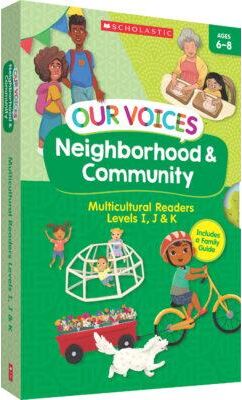
Our Voices: Neighborhood & Community Boxed SetFoster a feeling of belonging while building key reading skills with these colorful storybooks that spotlight a variety of neighborhoods and communities. The 10 charming stories feature characters from different cultural backgrounds who learn about...32,37 $*Shipping: 0,00 $Secure redirect to the provider
-
Nagdi Suleman Discovering Through Death - Beliefs and Practices - Non Fiction - PaperbackTitle:. Discovering Through Death - Beliefs and Practices Condition: BRAND NEW. Format: Paperback Overview:. Discovering Through Death - Beliefs and Practices invites readers into a thoughtful, interdisciplinary exploration of how cultures interpret mortality and mark farewell. This paperback offers clear, accessible prose that unwraps complex ideas without jargon. It examines why societies ritualize death, how mourning shapes communities, and how beliefs influence end-of-life decisions in everyday life. Spanning historical sources and contemporary practices, the book weaves anthropology, religious studies, psychology, and ethics to present a nuanced panorama of dying cultures around the world. Expect concise, well-structured chapters, each accompanied by key terms and reflective prompts that encourage personal engagement rather than passive reading. The author presents case studies—from quiet village rites to urban memorial ceremonies—to illuminate both universal themes and striking differences. For students, caregivers, nurses, clergy, and curious readers, this guide offers practical insights: how rituals provide meaning, how conversations about death improve care, and how to approach sensitive topics with respect. The tone is scholarly yet approachable, never sensational, inviting readers to examine their own beliefs while building empathy for others. Design elements such as boxed sidebars, glossary terms, and reading prompts make it an ideal companion for coursework, reading groups, or solo study. By the final chapter, you’ll have a framework for understanding death not as a distant incident, but as a deeply human process that unites us across cultures. What Makes This Book Stand Out:. Unlike many introductions, Discovering Through Death grounds theory in everyday practice. The author threads cross-cultural comparisons with accessible explanations of ritual meanings, grief processes, and ethical questions around death and dying. It is not a sterile survey; it invites readers to consider how beliefs inform caregiving, policy, and personal decisions. The inclusion of real-world case studies helps readers imagine themselves in different cultural contexts, while digestible summaries at the end of each chapter reinforce learning. A thoughtfully compiled glossary demystifies terms such as eschatology, ritual transition, and bereavement; sidebars offer quick takeaways for students, teachers, or busy professionals. The narrative pace balances curiosity with empathy, encouraging reflective reading and discussion. Whether you’re studying for a course, supporting someone at end of life, or simply seeking a broader understanding of mortality, this book provides a reliable, respectful lens that can be revisited chapter by chapter. Who This Book Is Perfect For:. Perfect for undergraduates and postgraduates studying anthropology, religious studies, sociology, or medical humanities; professionals in palliative care, nursing, social work, and chaplaincy;...99,99 £*Shipping: 0,00 £Secure redirect to the provider
-
HarperCollins The Fellowship of the Ring Book One by J.R.R. Tolkien - Fiction - PaperbackTitle:. The Fellowship of the Ring Format: Paperback Overview:. J.R.R. Tolkien’s masterwork begins here, launching readers into the richly imagined landscape of Middle-earth with a story that fundamentally reshaped the fantasy genre. As Book One of The Lord of the Rings trilogy, this volume follows humble hobbit Frodo Baggins as he inherits an ancient and perilous artefact in the quiet village of Hobbiton. Guided by the wizard Gandalf, Frodo must flee his home and join forces with seven other companions to embark on a hazardous journey toward Mordor. Only someone who forged the cursed ring holds the power to destroy it, making their mission both desperate and vital. Written with meticulous care and profound linguistic depth, this edition brings back one of literature’s most enduring adventures. Packed with sweeping horizons, looming shadows, and moments of quiet wonder, it sets the stage for a sprawling epic that has captivated generations. Whether you are stepping into Tolkien’s realm for the very first time or returning to familiar paths, this paperback delivers the definitive opening chapter in a timeless quest. What Makes This Book Stand Out:. Tolkien’s prose operates at a rare intersection of mythic scale and intimate character study, drawing readers into a world that feels archaeologically real rather than merely invented. The initial chapters establish a deceptively gentle pace before gradually tightening into a harrowing escape across the Shire and beyond. Every forest, river, and mountain carries historical weight, reflecting centuries of invented lore that underpin the central conflict. This standalone volume also excels because it functions as both a complete narrative arc and an indispensable gateway to a larger mythology. Readers who appreciate carefully mapped geographies, intricate political dynamics among Elves, Men, and Dwarves, and themes of courage against overwhelming darkness will find endless richness here. The physical paperback format further enhances the experience, offering a portable yet substantial companion for long journeys while preserving the original text without compromise. Who This Book Is Perfect For:. This edition is ideally suited for first-time fantasy readers seeking a foundational classic, university students analysing modern English literature, and devoted followers revisiting Tolkien’s original vision ahead of any screen adaptations. It appeals strongly to bibliophiles who prefer traditional print bindings over digital formats, allowing natural marginalia and easy navigation through dense descriptive passages. Parents looking for mature crossover fiction that bridges young adult and adult audiences will also find it highly rewarding. Collectors and casual gift-givers benefit from its universal recognition and enduring shelf presence. Ultimately, anyone craving immersive escapism grounded in coherent internal logic and profound moral complexity will discover something deeply satisfying within these pages....8,99 £*Shipping: 2,99 £Secure redirect to the provider
-
'Salts or molecules?'
Salts are compounds formed from the reaction of an acid and a base, while molecules are made up of atoms bonded together. Salts are ionic compounds, meaning they are made up of ions, while molecules can be either ionic or covalent compounds. Salts have a specific crystalline structure and are often soluble in water, while molecules can have a wide range of physical properties and solubilities. Overall, salts and molecules are distinct types of chemical compounds with different structures and properties. **
-
Which of the following molecules are dipole molecules and why?
Molecules that have a dipole moment are considered dipole molecules. A dipole moment occurs when there is an uneven distribution of electron density within a molecule, resulting in a partial positive and partial negative charge. For example, molecules like water (H2O) and ammonia (NH3) are dipole molecules because of their polar covalent bonds, which create a separation of charge within the molecule. On the other hand, molecules like carbon dioxide (CO2) and methane (CH4) are nonpolar and do not have a dipole moment because the electronegativity of the atoms cancel each other out, resulting in a symmetrical distribution of charge. **
-
What is the difference between compound molecules and element molecules?
Compound molecules are made up of two or more different elements chemically bonded together, such as water (H2O) or carbon dioxide (CO2). Element molecules, on the other hand, are made up of two or more atoms of the same element bonded together, such as oxygen (O2) or nitrogen (N2). In compound molecules, the atoms are different, while in element molecules, the atoms are the same. **
-
Why do heptan-1-ol molecules and water molecules not mix?
Heptan-1-ol molecules and water molecules do not mix well because heptan-1-ol is a nonpolar molecule, while water is a polar molecule. Nonpolar molecules are not attracted to polar molecules, so they do not easily mix. Additionally, heptan-1-ol is hydrophobic, meaning it repels water, further preventing the two substances from mixing. This is due to the difference in the polarity and intermolecular forces between the two substances. **
Similar search terms for Molecules
-
Skip's Garage Faith Over Fear Cornhole Boards"Includes: (2) ACA Regulation Size Cornhole Boards. Boards are Regulation 24"" Wide x 48"" Long. Easily Add All-Weather Resin Filled Bags. Add Accessories like a Carrying Case or Board Lights. Lights are Multicolor and Easily Change Colors & Modes."304,49 $*Shipping: 0,00 $Secure redirect to the provider
-
Skip's Garage Faith Over Fear Cornhole Boards"Includes: (2) ACA Regulation Size Cornhole Boards. Boards are Regulation 24"" Wide x 48"" Long. Easily Add All-Weather Resin Filled Bags. Add Accessories like a Carrying Case or Board Lights. Lights are Multicolor and Easily Change Colors & Modes."344,49 $*Shipping: 0,00 $Secure redirect to the provider
-
Skip's Garage Faith Over Fear Cornhole Boards"Includes: (2) ACA Regulation Size Cornhole Boards. Boards are Regulation 24"" Wide x 48"" Long. Easily Add All-Weather Resin Filled Bags. Add Accessories like a Carrying Case or Board Lights. Lights are Multicolor and Easily Change Colors & Modes."351,99 $*Shipping: 0,00 $Secure redirect to the provider
-
Skip's Garage Faith Over Fear Cornhole Boards"Includes: (2) ACA Regulation Size Cornhole Boards. Boards are Regulation 24"" Wide x 48"" Long. Easily Add All-Weather Resin Filled Bags. Add Accessories like a Carrying Case or Board Lights. Lights are Multicolor and Easily Change Colors & Modes."471,49 $*Shipping: 0,00 $Secure redirect to the provider
-
Why are water molecules permanent dipoles and carbon dioxide molecules not?
Water molecules are permanent dipoles because they have a bent molecular shape with unequal sharing of electrons between the oxygen and hydrogen atoms. This results in a partial negative charge on the oxygen atom and partial positive charges on the hydrogen atoms, creating a permanent dipole moment. On the other hand, carbon dioxide molecules are not permanent dipoles because they have a linear molecular shape with symmetrical distribution of the two oxygen atoms and the carbon atom. This results in equal sharing of electrons and no permanent dipole moment. **
-
How are molecules recognized?
Molecules are recognized through specific interactions between their chemical structures and complementary binding sites on other molecules. This recognition process involves the formation of non-covalent bonds such as hydrogen bonds, van der Waals forces, and electrostatic interactions. The shape, size, and charge distribution of molecules play a crucial role in determining their recognition by other molecules. Additionally, specific functional groups and chemical properties can also contribute to the recognition process. **
-
How are molecules formed?
Molecules are formed through chemical bonding between atoms. Atoms can either share electrons to form covalent bonds or transfer electrons to form ionic bonds. The type of bonding that occurs depends on the elements involved and their tendency to gain, lose, or share electrons. Once atoms are bonded together, they form a stable structure known as a molecule. **
-
Search for dipole molecules.
Dipole molecules are molecules that have a separation of positive and negative charges within the molecule. This separation creates a dipole moment, which results in the molecule having a positive end and a negative end. Examples of dipole molecules include water (H2O), hydrogen chloride (HCl), and ammonia (NH3). These molecules are important in various chemical reactions and interactions due to their polar nature. **
* All prices are inclusive of VAT and, if applicable, plus shipping costs. The offer information is based on the details provided by the respective shop and is updated through automated processes. Real-time updates do not occur, so deviations can occur in individual cases. ** Note: Parts of this content were created by AI.