Buy baptisten.eu ?
We are moving the project
baptisten.eu .
Are you interested in purchasing the domain
baptisten.eu ?
domain@kv-gmbh.de · 0541-91531010
Buy baptisten.eu ?
Do Americans take faith more seriously than Germans?
It is difficult to make a blanket statement about the religious attitudes of an entire nation, as individuals' beliefs and practices can vary widely. However, it is generally understood that religion plays a more significant role in the lives of many Americans compared to Germans. This is evidenced by higher rates of religious affiliation, church attendance, and the influence of religious beliefs on social and political issues in the United States. In contrast, Germany is known for having a more secular society, with lower rates of religious adherence and a greater emphasis on secularism in public life. **
Why have so many Germans fallen away from their faith?
There are several factors that have contributed to the decline in religious affiliation among Germans. One reason is the influence of secularization and modernization, which has led to a decrease in the importance of religion in people's lives. Additionally, historical events such as World War II and the subsequent division of the country may have led to disillusionment with organized religion. Furthermore, the rise of individualism and the emphasis on personal autonomy in German society may have led some people to distance themselves from traditional religious institutions. Overall, the decline in religious affiliation among Germans can be attributed to a combination of social, historical, and cultural factors. **


Similar search terms for Germans
Top-Angebote
Products related to Germans:
-
Why the Germans Do It Better: Notes from a Grown-Up Country by John Kampfner - Non Fiction - PaperbackTitle:. Why the Germans Do It Better: Notes from a Grown-Up Country Condition: BRAND NEW. Format: Paperback Overview:. Emerging from a long arc of German history, Why the Germans Do It Better invites readers to understand how a country born from turbulent city-state origins evolved into a modern democracy with astonishing economic resilience. John Kampfner blends his personal journeys with sharp analysis and vivid anecdotes, weaving memoir, history, and travelogue into a clear, engaging narrative. He examines the social market economy, the strength of civic memory, and the pragmatic, rule-bound temperament that many in the West now admire—and sometimes envy. In a world where democracy is tested by rising authoritarian currents, Kampfner asks what Germany can teach Britain and other democracies about leadership, governance, and the courage to confront the past. The book is timely in the post-Brexit landscape, offering a thoughtful counterpoint to nostalgia with evidence, nuance, and wit. It isn’t a how-to manual but a persuasive portrait of a nation that, despite its flaws, has become a stable, energetic hub of European life. For curious readers seeking clarity on Germany’s place in the 21st century, this book offers both illumination and conversation-starting provocation. Kampfner’s voice is confident yet willing to critique, and his travelogue touches on Berlin, Munich, and the former East, painting a living map of German society today. What Makes This Book Stand Out:. Why the Germans Do It Better stands out for its uncommon blend of genres. Part memoir, part history, and part travelogue, it refuses to be a dry political manual and instead invites readers into the living story of a nation that has often puzzled outsiders. Kampfner writes with the authority of decades of reporting on European politics, pairing personal encounters with solid empirical observation. He challenges conventional narratives about Germany’s past and present, offering a balanced portrait that recognises mistakes while celebrating resilience, social cohesion, and economic pragmatism. The result is a persuasive, accessible read that appeals to both policy wonks and curious general readers. In a post-Brexit, geopolitically shifting world, this book provides timely insights into how Germany’s model of governance, welfare balance, and civic responsibility can inform broader debates about democracy, stability, and leadership. It’s an engaging, thought-provoking guide to a country that repeatedly proves there is more to be learned than first meets the eye. Who This Book Is Perfect For:. This is ideal for readers who want clear context for modern Europe, students of politics or history, and professionals seeking a grounded, humane analysis of governance in a major democracy. It will appeal to book clubs, travelers curious about contemporary Germany, and anyone intrigued by how culture, policy, and memory shape national character. Fans of smart, accessible non-fiction that...10,99 £*Shipping: 2,99 £Secure redirect to the provider
-
John Kampfner Collection 3 Books Set (In Search Of Berlin, Braver New World & Why the Germans Do it Better)- Fiction - Mixed FormatTitles in This Set:. Braver New World [Hardcover]. Why the Germans Do it Better. In Search Of Berlin. Condition: BRAND NEW. Format: Mixedlot. ISBN: 9789124029760. Overview:. Three timely, thought-provoking journeys into modern history and ideas, this John Kampfner collection pairs Braver New World’s brisk, urgent look at how societies solve stubborn problems with a nuanced examination of national character in Why the Germans Do it Better, and a deeply personal, immersive exploration of Berlin in In Search Of Berlin. Braver New World argues that innovation often arises from constraint, and asks readers to rethink where true progress comes from. Kampfner’s blend of reportage, history, and policy insight makes it a compelling read for non-fiction fans, policy students, and general readers who crave clarity in a world of conflicting narratives. Why the Germans Do it Better surveys Germany’s turbulent 150-year arc—from fragmentation to industrial power—positioning the country as a modern anchor for democracy and stability. In Search Of Berlin offers a lyrical, documentary journey through a city that cannot be separated from its past. Together, the set delivers a coherent reading journey: ideas, context, and human stories that illuminate Europe’s present.. What Makes This Collection Special:. United by a common author and a focus on resilience, governance, and memory, this collection offers more than three standalone books. The threads across Braver New World, Why the Germans Do it Better, and In Search Of Berlin create a multifaceted portrait: how societies adapt under pressure, how national myths shape policy, and how urban spaces reveal historical truths. Readers gain the satisfaction of a curated journey—each title complements the others, building context and contrast. The set is ideal for gift-giving to curious readers who want both intellectual stimulation and engaging storytelling. The hardcover, narrative-driven writing style, and the careful balance of analysis and anecdote make this a collectible that remains relevant in study circles, book clubs, and personal libraries alike.. Books Included in This Collection:. Braver New World [Hardcover]. Braver New World is a brisk, urgent examination of how nations confront difficult problems and the courage required to pursue bold, often unconventional solutions. Kampfner argues that the places showing true innovation are those with their backs against the wall, not the wealthiest authorities claiming to have all the answers. The book blends case studies, policy analysis, and human stories to illuminate why progress sometimes comes from constraint, and why leadership matters more than ideology. Readers will come away with a clearer sense of where to look for practical solutions in a complex, rapidly changing world.. Why the Germans Do it Better. Emerging from a 150-year arc of city-states and turbulent history, Germany's model is dissected not as nostalgia, but as a working blueprint for steadiness in...33,99 £*Shipping: 2,99 £Secure redirect to the provider
-
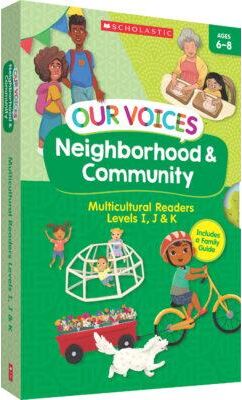
Our Voices: Neighborhood & Community Boxed SetFoster a feeling of belonging while building key reading skills with these colorful storybooks that spotlight a variety of neighborhoods and communities. The 10 charming stories feature characters from different cultural backgrounds who learn about...32,37 $*Shipping: 0,00 $Secure redirect to the provider
-
Nagdi Suleman Discovering Through Death - Beliefs and Practices - Non Fiction - PaperbackTitle:. Discovering Through Death - Beliefs and Practices Condition: BRAND NEW. Format: Paperback Overview:. Discovering Through Death - Beliefs and Practices invites readers into a thoughtful, interdisciplinary exploration of how cultures interpret mortality and mark farewell. This paperback offers clear, accessible prose that unwraps complex ideas without jargon. It examines why societies ritualize death, how mourning shapes communities, and how beliefs influence end-of-life decisions in everyday life. Spanning historical sources and contemporary practices, the book weaves anthropology, religious studies, psychology, and ethics to present a nuanced panorama of dying cultures around the world. Expect concise, well-structured chapters, each accompanied by key terms and reflective prompts that encourage personal engagement rather than passive reading. The author presents case studies—from quiet village rites to urban memorial ceremonies—to illuminate both universal themes and striking differences. For students, caregivers, nurses, clergy, and curious readers, this guide offers practical insights: how rituals provide meaning, how conversations about death improve care, and how to approach sensitive topics with respect. The tone is scholarly yet approachable, never sensational, inviting readers to examine their own beliefs while building empathy for others. Design elements such as boxed sidebars, glossary terms, and reading prompts make it an ideal companion for coursework, reading groups, or solo study. By the final chapter, you’ll have a framework for understanding death not as a distant incident, but as a deeply human process that unites us across cultures. What Makes This Book Stand Out:. Unlike many introductions, Discovering Through Death grounds theory in everyday practice. The author threads cross-cultural comparisons with accessible explanations of ritual meanings, grief processes, and ethical questions around death and dying. It is not a sterile survey; it invites readers to consider how beliefs inform caregiving, policy, and personal decisions. The inclusion of real-world case studies helps readers imagine themselves in different cultural contexts, while digestible summaries at the end of each chapter reinforce learning. A thoughtfully compiled glossary demystifies terms such as eschatology, ritual transition, and bereavement; sidebars offer quick takeaways for students, teachers, or busy professionals. The narrative pace balances curiosity with empathy, encouraging reflective reading and discussion. Whether you’re studying for a course, supporting someone at end of life, or simply seeking a broader understanding of mortality, this book provides a reliable, respectful lens that can be revisited chapter by chapter. Who This Book Is Perfect For:. Perfect for undergraduates and postgraduates studying anthropology, religious studies, sociology, or medical humanities; professionals in palliative care, nursing, social work, and chaplaincy;...99,99 £*Shipping: 0,00 £Secure redirect to the provider



-
Are Swiss Germans Germans or Austrians?
Swiss Germans are considered to be a distinct cultural group within Switzerland, with their own unique dialect, traditions, and identity. While they may share some similarities with Germans and Austrians due to historical and geographical connections, Swiss Germans are not considered to be the same as either Germans or Austrians. They have their own distinct cultural heritage that sets them apart from both Germans and Austrians. **
-
Why do Germans bully other Germans?
Germans may bully other Germans for a variety of reasons, including jealousy, insecurity, and a desire for power or control. Bullying can also be a result of social or cultural pressures, as well as individual personality traits. Additionally, historical and societal factors may contribute to a culture of bullying within certain groups or communities. It's important to address these underlying issues and promote empathy and understanding to prevent bullying within German society. **
-
Are Russian-Germans Russians or Germans?
Russian-Germans are a distinct ethnic group with a unique cultural and historical background. They are descendants of Germans who migrated to Russia in the 18th and 19th centuries and have developed their own distinct identity and traditions. While they may have cultural ties to both Russia and Germany, they are considered a separate ethnic group with their own language, customs, and traditions. Therefore, it would be more accurate to consider them as Russian-Germans rather than simply Russians or Germans. **
-
Why are Germans actually called Germans?
The name "Germans" is derived from the Latin word "Germani," which was used by the Romans to refer to the various tribes living in the area east of the Rhine River. Over time, this name became associated with the people living in what is now modern-day Germany. The name "Germani" is believed to have originated from the Celtic word "ger," meaning "neighbor," as the Germanic tribes were considered neighbors by the Celts. Therefore, the name "Germans" is a historical and linguistic legacy that has been passed down through the ages. **


Are East Germans stricter than West Germans?
It is not accurate to make a blanket statement about the strictness of East Germans versus West Germans. Both regions have their own unique cultural and historical influences that shape the attitudes and behaviors of their residents. It is important to recognize that individuals within each region may vary in their strictness based on personal values, upbringing, and other factors. Additionally, the reunification of Germany has led to increased interaction and integration between East and West, blurring the lines of regional differences. **
Why do East Germans hate West Germans?
The animosity between some East Germans and West Germans can be traced back to the stark differences in living conditions and opportunities that existed before the reunification of Germany in 1990. Many East Germans felt marginalized and disadvantaged compared to their Western counterparts, leading to feelings of resentment and frustration. Additionally, the rapid changes and challenges that came with reunification, such as job losses and economic instability, further fueled tensions between the two groups. While not all East Germans hate West Germans, these historical and socio-economic factors have contributed to lingering animosities in some segments of the population. **
Top-Angebote
Products related to Germans:
-
John Kampfner Collection 2 Books Set (In Search Of Berlin & Why the Germans Do it Better)Description. Condition: BRAND NEW. Format: Paperback. In Search Of Berlin:. No other city has had so many lives, survived so many disasters and has reinvented itself so many times. No other city is like Berlin.Ever since John Kampfner was a young journalist in Communist East Berlin, he hasn't been able to get the city out of his mind. It is a place tortured by its past, obsessed with memories, a place where traumas are unleashed and the traumatised have gathered.Over the past four years Kampfner has walked the length and breadth of Berlin, delving into the archives, and talking to historians and writers, architects and archaeologists. He clambers onto a fallen statue of Lenin; he rummages in boxes of early Medieval bones; he learns about the cabaret star so outrageous she was thrown out of the city.. Why the Germans Do it Better:. Emerging from a collection of city states 150 years ago, no other country has had as turbulent a history as Germany or enjoyed so much prosperity in such a short time frame. Today, as much of the world succumbs to authoritarianism and democracy is undermined from its heart, Germany stands as a bulwark for decency and stability.Mixing personal journey and anecdote with compelling empirical evidence, this is a critical and entertaining exploration of the country many in the West still love to hate. Raising important questions for our post-Brexit landscape, Kampfner asks why, despite its faults, Germany has become a model for others to emulate, while Britain fails to tackle contemporary challenges. Part memoir, part history, part travelogue, Why the Germans Do It Better is a rich and witty portrait of an eternally fascinating country.. Title. John Kampfner Collection 2 Books Set (In Search Of Berlin & Why the Germans Do it Better). Delivery. Content. Reviews13,99 £*Shipping: 2,99 £Secure redirect to the provider
-
John Kampfner Collection 2 Books Set (In Search Of Berlin [Hardcover] & Why the Germans Do it Better)Description. In Search Of Berlin [Hardcover]:. Ever since John Kampfner was a young journalist in Communist East Berlin, he hasn't been able to get the city out of his mind. It is a place tortured by its past, obsessed with memories, a place where traumas are unleashed and the traumatised have gathered.Over the past four years Kampfner has walked the length and breadth of Berlin, delving into the archives, and talking to historians and writers, architects and archaeologists. He clambers onto a fallen statue of Lenin; he rummages in boxes of early Medieval bones; he learns about the cabaret star so outrageous she was thrown out of the city.. Why the Germans Do it Better:. Emerging from a collection of city states 150 years ago, no other country has had as turbulent a history as Germany or enjoyed so much prosperity in such a short time frame. Today, as much of the world succumbs to authoritarianism and democracy is undermined from its heart, Germany stands as a bulwark for decency and stability.Mixing personal journey and anecdote with compelling empirical evidence, this is a critical and entertaining exploration of the country many in the West still love to hate.. Title. John Kampfner Collection 2 Books Set (In Search Of Berlin [Hardcover] & Why the Germans Do it Better). Delivery. Content. Reviews15,99 £*Shipping: 2,99 £Secure redirect to the provider
-
Why the Germans Do It Better: Notes from a Grown-Up Country by John Kampfner - Non Fiction - PaperbackTitle:. Why the Germans Do It Better: Notes from a Grown-Up Country Condition: BRAND NEW. Format: Paperback Overview:. Emerging from a long arc of German history, Why the Germans Do It Better invites readers to understand how a country born from turbulent city-state origins evolved into a modern democracy with astonishing economic resilience. John Kampfner blends his personal journeys with sharp analysis and vivid anecdotes, weaving memoir, history, and travelogue into a clear, engaging narrative. He examines the social market economy, the strength of civic memory, and the pragmatic, rule-bound temperament that many in the West now admire—and sometimes envy. In a world where democracy is tested by rising authoritarian currents, Kampfner asks what Germany can teach Britain and other democracies about leadership, governance, and the courage to confront the past. The book is timely in the post-Brexit landscape, offering a thoughtful counterpoint to nostalgia with evidence, nuance, and wit. It isn’t a how-to manual but a persuasive portrait of a nation that, despite its flaws, has become a stable, energetic hub of European life. For curious readers seeking clarity on Germany’s place in the 21st century, this book offers both illumination and conversation-starting provocation. Kampfner’s voice is confident yet willing to critique, and his travelogue touches on Berlin, Munich, and the former East, painting a living map of German society today. What Makes This Book Stand Out:. Why the Germans Do It Better stands out for its uncommon blend of genres. Part memoir, part history, and part travelogue, it refuses to be a dry political manual and instead invites readers into the living story of a nation that has often puzzled outsiders. Kampfner writes with the authority of decades of reporting on European politics, pairing personal encounters with solid empirical observation. He challenges conventional narratives about Germany’s past and present, offering a balanced portrait that recognises mistakes while celebrating resilience, social cohesion, and economic pragmatism. The result is a persuasive, accessible read that appeals to both policy wonks and curious general readers. In a post-Brexit, geopolitically shifting world, this book provides timely insights into how Germany’s model of governance, welfare balance, and civic responsibility can inform broader debates about democracy, stability, and leadership. It’s an engaging, thought-provoking guide to a country that repeatedly proves there is more to be learned than first meets the eye. Who This Book Is Perfect For:. This is ideal for readers who want clear context for modern Europe, students of politics or history, and professionals seeking a grounded, humane analysis of governance in a major democracy. It will appeal to book clubs, travelers curious about contemporary Germany, and anyone intrigued by how culture, policy, and memory shape national character. Fans of smart, accessible non-fiction that...10,99 £*Shipping: 2,99 £Secure redirect to the provider
-
John Kampfner Collection 3 Books Set (In Search Of Berlin, Braver New World & Why the Germans Do it Better)- Fiction - Mixed FormatTitles in This Set:. Braver New World [Hardcover]. Why the Germans Do it Better. In Search Of Berlin. Condition: BRAND NEW. Format: Mixedlot. ISBN: 9789124029760. Overview:. Three timely, thought-provoking journeys into modern history and ideas, this John Kampfner collection pairs Braver New World’s brisk, urgent look at how societies solve stubborn problems with a nuanced examination of national character in Why the Germans Do it Better, and a deeply personal, immersive exploration of Berlin in In Search Of Berlin. Braver New World argues that innovation often arises from constraint, and asks readers to rethink where true progress comes from. Kampfner’s blend of reportage, history, and policy insight makes it a compelling read for non-fiction fans, policy students, and general readers who crave clarity in a world of conflicting narratives. Why the Germans Do it Better surveys Germany’s turbulent 150-year arc—from fragmentation to industrial power—positioning the country as a modern anchor for democracy and stability. In Search Of Berlin offers a lyrical, documentary journey through a city that cannot be separated from its past. Together, the set delivers a coherent reading journey: ideas, context, and human stories that illuminate Europe’s present.. What Makes This Collection Special:. United by a common author and a focus on resilience, governance, and memory, this collection offers more than three standalone books. The threads across Braver New World, Why the Germans Do it Better, and In Search Of Berlin create a multifaceted portrait: how societies adapt under pressure, how national myths shape policy, and how urban spaces reveal historical truths. Readers gain the satisfaction of a curated journey—each title complements the others, building context and contrast. The set is ideal for gift-giving to curious readers who want both intellectual stimulation and engaging storytelling. The hardcover, narrative-driven writing style, and the careful balance of analysis and anecdote make this a collectible that remains relevant in study circles, book clubs, and personal libraries alike.. Books Included in This Collection:. Braver New World [Hardcover]. Braver New World is a brisk, urgent examination of how nations confront difficult problems and the courage required to pursue bold, often unconventional solutions. Kampfner argues that the places showing true innovation are those with their backs against the wall, not the wealthiest authorities claiming to have all the answers. The book blends case studies, policy analysis, and human stories to illuminate why progress sometimes comes from constraint, and why leadership matters more than ideology. Readers will come away with a clearer sense of where to look for practical solutions in a complex, rapidly changing world.. Why the Germans Do it Better. Emerging from a 150-year arc of city-states and turbulent history, Germany's model is dissected not as nostalgia, but as a working blueprint for steadiness in...33,99 £*Shipping: 2,99 £Secure redirect to the provider
-
Do Americans take faith more seriously than Germans?
It is difficult to make a blanket statement about the religious attitudes of an entire nation, as individuals' beliefs and practices can vary widely. However, it is generally understood that religion plays a more significant role in the lives of many Americans compared to Germans. This is evidenced by higher rates of religious affiliation, church attendance, and the influence of religious beliefs on social and political issues in the United States. In contrast, Germany is known for having a more secular society, with lower rates of religious adherence and a greater emphasis on secularism in public life. **
-
Why have so many Germans fallen away from their faith?
There are several factors that have contributed to the decline in religious affiliation among Germans. One reason is the influence of secularization and modernization, which has led to a decrease in the importance of religion in people's lives. Additionally, historical events such as World War II and the subsequent division of the country may have led to disillusionment with organized religion. Furthermore, the rise of individualism and the emphasis on personal autonomy in German society may have led some people to distance themselves from traditional religious institutions. Overall, the decline in religious affiliation among Germans can be attributed to a combination of social, historical, and cultural factors. **
-
Are Swiss Germans Germans or Austrians?
Swiss Germans are considered to be a distinct cultural group within Switzerland, with their own unique dialect, traditions, and identity. While they may share some similarities with Germans and Austrians due to historical and geographical connections, Swiss Germans are not considered to be the same as either Germans or Austrians. They have their own distinct cultural heritage that sets them apart from both Germans and Austrians. **
-
Why do Germans bully other Germans?
Germans may bully other Germans for a variety of reasons, including jealousy, insecurity, and a desire for power or control. Bullying can also be a result of social or cultural pressures, as well as individual personality traits. Additionally, historical and societal factors may contribute to a culture of bullying within certain groups or communities. It's important to address these underlying issues and promote empathy and understanding to prevent bullying within German society. **
Similar search terms for Germans
-
Our Voices: Neighborhood & Community Boxed SetFoster a feeling of belonging while building key reading skills with these colorful storybooks that spotlight a variety of neighborhoods and communities. The 10 charming stories feature characters from different cultural backgrounds who learn about...32,37 $*Shipping: 0,00 $Secure redirect to the provider
-
Nagdi Suleman Discovering Through Death - Beliefs and Practices - Non Fiction - PaperbackTitle:. Discovering Through Death - Beliefs and Practices Condition: BRAND NEW. Format: Paperback Overview:. Discovering Through Death - Beliefs and Practices invites readers into a thoughtful, interdisciplinary exploration of how cultures interpret mortality and mark farewell. This paperback offers clear, accessible prose that unwraps complex ideas without jargon. It examines why societies ritualize death, how mourning shapes communities, and how beliefs influence end-of-life decisions in everyday life. Spanning historical sources and contemporary practices, the book weaves anthropology, religious studies, psychology, and ethics to present a nuanced panorama of dying cultures around the world. Expect concise, well-structured chapters, each accompanied by key terms and reflective prompts that encourage personal engagement rather than passive reading. The author presents case studies—from quiet village rites to urban memorial ceremonies—to illuminate both universal themes and striking differences. For students, caregivers, nurses, clergy, and curious readers, this guide offers practical insights: how rituals provide meaning, how conversations about death improve care, and how to approach sensitive topics with respect. The tone is scholarly yet approachable, never sensational, inviting readers to examine their own beliefs while building empathy for others. Design elements such as boxed sidebars, glossary terms, and reading prompts make it an ideal companion for coursework, reading groups, or solo study. By the final chapter, you’ll have a framework for understanding death not as a distant incident, but as a deeply human process that unites us across cultures. What Makes This Book Stand Out:. Unlike many introductions, Discovering Through Death grounds theory in everyday practice. The author threads cross-cultural comparisons with accessible explanations of ritual meanings, grief processes, and ethical questions around death and dying. It is not a sterile survey; it invites readers to consider how beliefs inform caregiving, policy, and personal decisions. The inclusion of real-world case studies helps readers imagine themselves in different cultural contexts, while digestible summaries at the end of each chapter reinforce learning. A thoughtfully compiled glossary demystifies terms such as eschatology, ritual transition, and bereavement; sidebars offer quick takeaways for students, teachers, or busy professionals. The narrative pace balances curiosity with empathy, encouraging reflective reading and discussion. Whether you’re studying for a course, supporting someone at end of life, or simply seeking a broader understanding of mortality, this book provides a reliable, respectful lens that can be revisited chapter by chapter. Who This Book Is Perfect For:. Perfect for undergraduates and postgraduates studying anthropology, religious studies, sociology, or medical humanities; professionals in palliative care, nursing, social work, and chaplaincy;...99,99 £*Shipping: 0,00 £Secure redirect to the provider
-
HarperCollins The Fellowship of the Ring Book One by J.R.R. Tolkien - Fiction - PaperbackTitle:. The Fellowship of the Ring Format: Paperback Overview:. J.R.R. Tolkien’s masterwork begins here, launching readers into the richly imagined landscape of Middle-earth with a story that fundamentally reshaped the fantasy genre. As Book One of The Lord of the Rings trilogy, this volume follows humble hobbit Frodo Baggins as he inherits an ancient and perilous artefact in the quiet village of Hobbiton. Guided by the wizard Gandalf, Frodo must flee his home and join forces with seven other companions to embark on a hazardous journey toward Mordor. Only someone who forged the cursed ring holds the power to destroy it, making their mission both desperate and vital. Written with meticulous care and profound linguistic depth, this edition brings back one of literature’s most enduring adventures. Packed with sweeping horizons, looming shadows, and moments of quiet wonder, it sets the stage for a sprawling epic that has captivated generations. Whether you are stepping into Tolkien’s realm for the very first time or returning to familiar paths, this paperback delivers the definitive opening chapter in a timeless quest. What Makes This Book Stand Out:. Tolkien’s prose operates at a rare intersection of mythic scale and intimate character study, drawing readers into a world that feels archaeologically real rather than merely invented. The initial chapters establish a deceptively gentle pace before gradually tightening into a harrowing escape across the Shire and beyond. Every forest, river, and mountain carries historical weight, reflecting centuries of invented lore that underpin the central conflict. This standalone volume also excels because it functions as both a complete narrative arc and an indispensable gateway to a larger mythology. Readers who appreciate carefully mapped geographies, intricate political dynamics among Elves, Men, and Dwarves, and themes of courage against overwhelming darkness will find endless richness here. The physical paperback format further enhances the experience, offering a portable yet substantial companion for long journeys while preserving the original text without compromise. Who This Book Is Perfect For:. This edition is ideally suited for first-time fantasy readers seeking a foundational classic, university students analysing modern English literature, and devoted followers revisiting Tolkien’s original vision ahead of any screen adaptations. It appeals strongly to bibliophiles who prefer traditional print bindings over digital formats, allowing natural marginalia and easy navigation through dense descriptive passages. Parents looking for mature crossover fiction that bridges young adult and adult audiences will also find it highly rewarding. Collectors and casual gift-givers benefit from its universal recognition and enduring shelf presence. Ultimately, anyone craving immersive escapism grounded in coherent internal logic and profound moral complexity will discover something deeply satisfying within these pages....8,99 £*Shipping: 2,99 £Secure redirect to the provider
-
Hamlyn Yours New Pregancy Bible (Hardback), The Vaginal Bible 2 Books Collection SetThe Vaginal Bible, New Pregancy Bible (Hardback) 2 Books Collection Set Your New Pregnancy Bible: The Experts' Guide to Pregnancy and Early Parenthood (Hardback) Recognised by women and their caregivers as simply the best pregnancy guide available, this latest edition of Your Pregnancy Bible has been updated to take account of recent changes in antenatal and newborn care. Given a fresh design, it still contains special fold-out sections on each of the trimesters and the birth process; week-by-week images of the developing baby; in-depth chapters dealing with all aspects of antenatal care, labour preparation, delivery experiences and care of the newborn; comprehensive reference sections on medical treatments and procedures in both pregnancy and the postnatal period and an extensive glossary of ante- and neonatal terminology. Written by a team of eminent specialists under the direction of a leading UK obstetrician, Your New Pregnancy Bible is filled with everything prospective parents need to know about creating the optimum environment for a developing baby and safeguarding the health and wellbeing of the mother The Vagina Bible: The vulva and the vagina Does eating sugar cause yeast infections? Does pubic hair have a function? Should you have a vulvovaginal care regimen? Will your vagina shrivel up if you go without sex? What's the truth about the HPV vaccine? So many important questions, so much convincing, confusing, contradictory misinformation! In this age of click bait, pseudoscience, and celebrity-endorsed products, it's easy to be overwhelmed-whether it's websites, advice from well-meaning friends, uneducated partners, and even healthcare providers. So how do you separate facts from fiction? Obstetrician Jen Gunter, an expert on women's health-and the internet's most popular go-to doc-comes to the rescue with a book that debunks the myths and educates and empowers women. From reproductive health to the impact of antibiotics and probiotics, and the latest trends, including vaginal steaming, vaginal marijuana products, and jade eggs, Gunter takes us on a factual, fun-filled journey. Discover the truth about: · The vaginal microbiome · Genital hygiene, lubricants, and hormone myths and fallacies · How diet impacts vaginal health · Stem cells and the vagina · Cosmetic vaginal surgery · What changes to expect during pregnancy, after childbirth, and through menopause · How medicine fails women by dismissing symptoms Plus: · Thongs vs. lace: the best underwear for vaginal health · How to select a tampon · The full glory of the clitoris and the myth of the G Spot ... And so much more. Whether you're a twenty-six-year-old worried that her labia are 'uncool' or a sixty-six-year-old dealing with painful sex, this comprehensive guide is sure to become a lifelong trusted resource.9,99 £*Shipping: 2,99 £Secure redirect to the provider
-
Are Russian-Germans Russians or Germans?
Russian-Germans are a distinct ethnic group with a unique cultural and historical background. They are descendants of Germans who migrated to Russia in the 18th and 19th centuries and have developed their own distinct identity and traditions. While they may have cultural ties to both Russia and Germany, they are considered a separate ethnic group with their own language, customs, and traditions. Therefore, it would be more accurate to consider them as Russian-Germans rather than simply Russians or Germans. **
-
Why are Germans actually called Germans?
The name "Germans" is derived from the Latin word "Germani," which was used by the Romans to refer to the various tribes living in the area east of the Rhine River. Over time, this name became associated with the people living in what is now modern-day Germany. The name "Germani" is believed to have originated from the Celtic word "ger," meaning "neighbor," as the Germanic tribes were considered neighbors by the Celts. Therefore, the name "Germans" is a historical and linguistic legacy that has been passed down through the ages. **
-
Are East Germans stricter than West Germans?
It is not accurate to make a blanket statement about the strictness of East Germans versus West Germans. Both regions have their own unique cultural and historical influences that shape the attitudes and behaviors of their residents. It is important to recognize that individuals within each region may vary in their strictness based on personal values, upbringing, and other factors. Additionally, the reunification of Germany has led to increased interaction and integration between East and West, blurring the lines of regional differences. **
-
Why do East Germans hate West Germans?
The animosity between some East Germans and West Germans can be traced back to the stark differences in living conditions and opportunities that existed before the reunification of Germany in 1990. Many East Germans felt marginalized and disadvantaged compared to their Western counterparts, leading to feelings of resentment and frustration. Additionally, the rapid changes and challenges that came with reunification, such as job losses and economic instability, further fueled tensions between the two groups. While not all East Germans hate West Germans, these historical and socio-economic factors have contributed to lingering animosities in some segments of the population. **
* All prices are inclusive of VAT and, if applicable, plus shipping costs. The offer information is based on the details provided by the respective shop and is updated through automated processes. Real-time updates do not occur, so deviations can occur in individual cases. ** Note: Parts of this content were created by AI.