Buy baptisten.eu ?
We are moving the project
baptisten.eu .
Are you interested in purchasing the domain
baptisten.eu ?
domain@kv-gmbh.de · 0541-91531010
Buy baptisten.eu ?
What are axes?
Axes are tools with a long handle and a sharp blade or head, typically used for chopping or cutting. They are commonly used for tasks such as splitting wood, shaping timber, or in some cases, as a weapon. Axes come in various shapes and sizes, each designed for specific purposes. They have been used by humans for thousands of years and continue to be an essential tool in many industries and activities. **
How many axes does a CNC machine with more than 6 axes have?
A CNC machine with more than 6 axes can have 7, 8, 9, or even more axes. The number of axes in a CNC machine refers to the number of directions in which the cutting tool or workpiece can move. Each additional axis allows for more complex and precise machining operations, enabling the machine to produce more intricate and detailed parts. **


Similar search terms for Axes
Top-Angebote
Products related to Axes:
-
XJUMP 13 FT Commercial Grade Inflatable Axe Throwing Game with 6 Foam Axes, Target Challenge Game for Indoor Outdoor FunBring competitive axe throwing excitement to parties, events, and recreational spaces with the XJUMP 13 FT Commercial Grade Inflatable Axe Throwing Game with 6 Foam Axes.1007,23 $*Shipping: 0,00 $Secure redirect to the provider
-
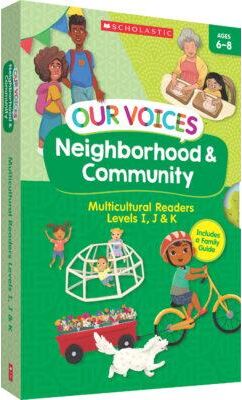
Our Voices: Neighborhood & Community Boxed SetFoster a feeling of belonging while building key reading skills with these colorful storybooks that spotlight a variety of neighborhoods and communities. The 10 charming stories feature characters from different cultural backgrounds who learn about...32,37 $*Shipping: 0,00 $Secure redirect to the provider
-
Nagdi Suleman Discovering Through Death - Beliefs and Practices - Non Fiction - PaperbackTitle:. Discovering Through Death - Beliefs and Practices Condition: BRAND NEW. Format: Paperback Overview:. Discovering Through Death - Beliefs and Practices invites readers into a thoughtful, interdisciplinary exploration of how cultures interpret mortality and mark farewell. This paperback offers clear, accessible prose that unwraps complex ideas without jargon. It examines why societies ritualize death, how mourning shapes communities, and how beliefs influence end-of-life decisions in everyday life. Spanning historical sources and contemporary practices, the book weaves anthropology, religious studies, psychology, and ethics to present a nuanced panorama of dying cultures around the world. Expect concise, well-structured chapters, each accompanied by key terms and reflective prompts that encourage personal engagement rather than passive reading. The author presents case studies—from quiet village rites to urban memorial ceremonies—to illuminate both universal themes and striking differences. For students, caregivers, nurses, clergy, and curious readers, this guide offers practical insights: how rituals provide meaning, how conversations about death improve care, and how to approach sensitive topics with respect. The tone is scholarly yet approachable, never sensational, inviting readers to examine their own beliefs while building empathy for others. Design elements such as boxed sidebars, glossary terms, and reading prompts make it an ideal companion for coursework, reading groups, or solo study. By the final chapter, you’ll have a framework for understanding death not as a distant incident, but as a deeply human process that unites us across cultures. What Makes This Book Stand Out:. Unlike many introductions, Discovering Through Death grounds theory in everyday practice. The author threads cross-cultural comparisons with accessible explanations of ritual meanings, grief processes, and ethical questions around death and dying. It is not a sterile survey; it invites readers to consider how beliefs inform caregiving, policy, and personal decisions. The inclusion of real-world case studies helps readers imagine themselves in different cultural contexts, while digestible summaries at the end of each chapter reinforce learning. A thoughtfully compiled glossary demystifies terms such as eschatology, ritual transition, and bereavement; sidebars offer quick takeaways for students, teachers, or busy professionals. The narrative pace balances curiosity with empathy, encouraging reflective reading and discussion. Whether you’re studying for a course, supporting someone at end of life, or simply seeking a broader understanding of mortality, this book provides a reliable, respectful lens that can be revisited chapter by chapter. Who This Book Is Perfect For:. Perfect for undergraduates and postgraduates studying anthropology, religious studies, sociology, or medical humanities; professionals in palliative care, nursing, social work, and chaplaincy;...99,99 £*Shipping: 0,00 £Secure redirect to the provider



-
What are parallels to the coordinate axes?
Parallels to the coordinate axes are lines that run parallel to the x-axis and y-axis in a coordinate plane. These lines have equations of the form y = k and x = h, where k and h are constants. Parallels to the x-axis are horizontal lines, while parallels to the y-axis are vertical lines. These lines are useful for understanding the relationships between different points and shapes in a coordinate plane. **
-
Why does the Earth have two axes?
The Earth has two axes because it rotates on an axis called the rotational axis, which is tilted at an angle of approximately 23.5 degrees. This tilt is responsible for the changing seasons on Earth. Additionally, the Earth also has a magnetic axis, which is the line around which the Earth's magnetic field is oriented. This magnetic axis is not aligned perfectly with the rotational axis, resulting in the Earth having two axes. **
-
How do I explain the concept of axes?
Axes are imaginary lines used to establish a reference system in a graph or coordinate plane. In a two-dimensional graph, there are typically two axes: the horizontal x-axis and the vertical y-axis. The point where the two axes intersect is called the origin. The axes help to locate and describe the position of points or objects in a graph by providing a set of coordinates. **
-
What type of 3D printer has two axes?
A 3D printer with two axes is typically referred to as a 2-axis 3D printer. This means that the printer can move in two directions - usually the X and Y axes - to create the desired shape or object. The 2-axis printer is limited in its movement compared to 3-axis or higher printers, but it can still produce a wide variety of objects with the right design and programming. **


How can I label the axes in GeoGebra?
To label the axes in GeoGebra, you can click on the axes to select them. Then, right-click on the axes and choose "Object Properties." In the Object Properties window, you can find options to label the axes by entering text in the "Name" field. You can also customize the appearance of the labels by changing the font, size, and color. **
'How do I swap the axes in Excel?'
To swap the axes in Excel, you can simply select the chart you want to modify and then go to the "Design" tab in the Chart Tools section. From there, click on the "Switch Row/Column" button, which will interchange the data on the x and y axes. This will effectively swap the axes on your chart, allowing you to present your data in a different orientation. **
Top-Angebote
Products related to Axes:
-
Kings County Tools Bench Vise with 2 Axes of Rotation and 4.5” Jaw OpeningThe Ultimate Versatile Vise by Kings County Tools can be fully oriented in two axes at the same time, giving you infinitely greater options in positioning than typical bench vices.248,99 $*Shipping: 0,00 $Secure redirect to the provider
-
Tools, Home & Hobby Axe Throwing Game Set With Plastic Target And 8 Safe Throwing Axes For Indoor Outdoor Fun Axe Throwing Game Set With Plastic Target And 8 Safe Throwing Axes For Indoor Outdoor FunBring exciting competition and unforgettable moments to any gathering with this axe throwing game set designed for family fun, parties, and outdoor entertainment. Featuring a plastic bristle target, 8 lightweight throwing axes, and a sturdy foldable...189,97 $*Shipping: 0,00 $Secure redirect to the provider
-
XJUMP 13 FT Commercial Grade Inflatable Axe Throwing Game with 6 Foam Axes, Target Challenge Game for Indoor Outdoor FunBring competitive axe throwing excitement to parties, events, and recreational spaces with the XJUMP 13 FT Commercial Grade Inflatable Axe Throwing Game with 6 Foam Axes.1007,23 $*Shipping: 0,00 $Secure redirect to the provider
-
What are axes?
Axes are tools with a long handle and a sharp blade or head, typically used for chopping or cutting. They are commonly used for tasks such as splitting wood, shaping timber, or in some cases, as a weapon. Axes come in various shapes and sizes, each designed for specific purposes. They have been used by humans for thousands of years and continue to be an essential tool in many industries and activities. **
-
How many axes does a CNC machine with more than 6 axes have?
A CNC machine with more than 6 axes can have 7, 8, 9, or even more axes. The number of axes in a CNC machine refers to the number of directions in which the cutting tool or workpiece can move. Each additional axis allows for more complex and precise machining operations, enabling the machine to produce more intricate and detailed parts. **
-
What are parallels to the coordinate axes?
Parallels to the coordinate axes are lines that run parallel to the x-axis and y-axis in a coordinate plane. These lines have equations of the form y = k and x = h, where k and h are constants. Parallels to the x-axis are horizontal lines, while parallels to the y-axis are vertical lines. These lines are useful for understanding the relationships between different points and shapes in a coordinate plane. **
-
Why does the Earth have two axes?
The Earth has two axes because it rotates on an axis called the rotational axis, which is tilted at an angle of approximately 23.5 degrees. This tilt is responsible for the changing seasons on Earth. Additionally, the Earth also has a magnetic axis, which is the line around which the Earth's magnetic field is oriented. This magnetic axis is not aligned perfectly with the rotational axis, resulting in the Earth having two axes. **
Similar search terms for Axes
-
Our Voices: Neighborhood & Community Boxed SetFoster a feeling of belonging while building key reading skills with these colorful storybooks that spotlight a variety of neighborhoods and communities. The 10 charming stories feature characters from different cultural backgrounds who learn about...32,37 $*Shipping: 0,00 $Secure redirect to the provider
-
Nagdi Suleman Discovering Through Death - Beliefs and Practices - Non Fiction - PaperbackTitle:. Discovering Through Death - Beliefs and Practices Condition: BRAND NEW. Format: Paperback Overview:. Discovering Through Death - Beliefs and Practices invites readers into a thoughtful, interdisciplinary exploration of how cultures interpret mortality and mark farewell. This paperback offers clear, accessible prose that unwraps complex ideas without jargon. It examines why societies ritualize death, how mourning shapes communities, and how beliefs influence end-of-life decisions in everyday life. Spanning historical sources and contemporary practices, the book weaves anthropology, religious studies, psychology, and ethics to present a nuanced panorama of dying cultures around the world. Expect concise, well-structured chapters, each accompanied by key terms and reflective prompts that encourage personal engagement rather than passive reading. The author presents case studies—from quiet village rites to urban memorial ceremonies—to illuminate both universal themes and striking differences. For students, caregivers, nurses, clergy, and curious readers, this guide offers practical insights: how rituals provide meaning, how conversations about death improve care, and how to approach sensitive topics with respect. The tone is scholarly yet approachable, never sensational, inviting readers to examine their own beliefs while building empathy for others. Design elements such as boxed sidebars, glossary terms, and reading prompts make it an ideal companion for coursework, reading groups, or solo study. By the final chapter, you’ll have a framework for understanding death not as a distant incident, but as a deeply human process that unites us across cultures. What Makes This Book Stand Out:. Unlike many introductions, Discovering Through Death grounds theory in everyday practice. The author threads cross-cultural comparisons with accessible explanations of ritual meanings, grief processes, and ethical questions around death and dying. It is not a sterile survey; it invites readers to consider how beliefs inform caregiving, policy, and personal decisions. The inclusion of real-world case studies helps readers imagine themselves in different cultural contexts, while digestible summaries at the end of each chapter reinforce learning. A thoughtfully compiled glossary demystifies terms such as eschatology, ritual transition, and bereavement; sidebars offer quick takeaways for students, teachers, or busy professionals. The narrative pace balances curiosity with empathy, encouraging reflective reading and discussion. Whether you’re studying for a course, supporting someone at end of life, or simply seeking a broader understanding of mortality, this book provides a reliable, respectful lens that can be revisited chapter by chapter. Who This Book Is Perfect For:. Perfect for undergraduates and postgraduates studying anthropology, religious studies, sociology, or medical humanities; professionals in palliative care, nursing, social work, and chaplaincy;...99,99 £*Shipping: 0,00 £Secure redirect to the provider
-
HarperCollins The Fellowship of the Ring Book One by J.R.R. Tolkien - Fiction - PaperbackTitle:. The Fellowship of the Ring Format: Paperback Overview:. J.R.R. Tolkien’s masterwork begins here, launching readers into the richly imagined landscape of Middle-earth with a story that fundamentally reshaped the fantasy genre. As Book One of The Lord of the Rings trilogy, this volume follows humble hobbit Frodo Baggins as he inherits an ancient and perilous artefact in the quiet village of Hobbiton. Guided by the wizard Gandalf, Frodo must flee his home and join forces with seven other companions to embark on a hazardous journey toward Mordor. Only someone who forged the cursed ring holds the power to destroy it, making their mission both desperate and vital. Written with meticulous care and profound linguistic depth, this edition brings back one of literature’s most enduring adventures. Packed with sweeping horizons, looming shadows, and moments of quiet wonder, it sets the stage for a sprawling epic that has captivated generations. Whether you are stepping into Tolkien’s realm for the very first time or returning to familiar paths, this paperback delivers the definitive opening chapter in a timeless quest. What Makes This Book Stand Out:. Tolkien’s prose operates at a rare intersection of mythic scale and intimate character study, drawing readers into a world that feels archaeologically real rather than merely invented. The initial chapters establish a deceptively gentle pace before gradually tightening into a harrowing escape across the Shire and beyond. Every forest, river, and mountain carries historical weight, reflecting centuries of invented lore that underpin the central conflict. This standalone volume also excels because it functions as both a complete narrative arc and an indispensable gateway to a larger mythology. Readers who appreciate carefully mapped geographies, intricate political dynamics among Elves, Men, and Dwarves, and themes of courage against overwhelming darkness will find endless richness here. The physical paperback format further enhances the experience, offering a portable yet substantial companion for long journeys while preserving the original text without compromise. Who This Book Is Perfect For:. This edition is ideally suited for first-time fantasy readers seeking a foundational classic, university students analysing modern English literature, and devoted followers revisiting Tolkien’s original vision ahead of any screen adaptations. It appeals strongly to bibliophiles who prefer traditional print bindings over digital formats, allowing natural marginalia and easy navigation through dense descriptive passages. Parents looking for mature crossover fiction that bridges young adult and adult audiences will also find it highly rewarding. Collectors and casual gift-givers benefit from its universal recognition and enduring shelf presence. Ultimately, anyone craving immersive escapism grounded in coherent internal logic and profound moral complexity will discover something deeply satisfying within these pages....8,99 £*Shipping: 2,99 £Secure redirect to the provider
-
Skip's Garage Faith Over Fear Cornhole Boards"Includes: (2) ACA Regulation Size Cornhole Boards. Boards are Regulation 24"" Wide x 48"" Long. Easily Add All-Weather Resin Filled Bags. Add Accessories like a Carrying Case or Board Lights. Lights are Multicolor and Easily Change Colors & Modes."304,49 $*Shipping: 0,00 $Secure redirect to the provider
-
How do I explain the concept of axes?
Axes are imaginary lines used to establish a reference system in a graph or coordinate plane. In a two-dimensional graph, there are typically two axes: the horizontal x-axis and the vertical y-axis. The point where the two axes intersect is called the origin. The axes help to locate and describe the position of points or objects in a graph by providing a set of coordinates. **
-
What type of 3D printer has two axes?
A 3D printer with two axes is typically referred to as a 2-axis 3D printer. This means that the printer can move in two directions - usually the X and Y axes - to create the desired shape or object. The 2-axis printer is limited in its movement compared to 3-axis or higher printers, but it can still produce a wide variety of objects with the right design and programming. **
-
How can I label the axes in GeoGebra?
To label the axes in GeoGebra, you can click on the axes to select them. Then, right-click on the axes and choose "Object Properties." In the Object Properties window, you can find options to label the axes by entering text in the "Name" field. You can also customize the appearance of the labels by changing the font, size, and color. **
-
'How do I swap the axes in Excel?'
To swap the axes in Excel, you can simply select the chart you want to modify and then go to the "Design" tab in the Chart Tools section. From there, click on the "Switch Row/Column" button, which will interchange the data on the x and y axes. This will effectively swap the axes on your chart, allowing you to present your data in a different orientation. **
* All prices are inclusive of VAT and, if applicable, plus shipping costs. The offer information is based on the details provided by the respective shop and is updated through automated processes. Real-time updates do not occur, so deviations can occur in individual cases. ** Note: Parts of this content were created by AI.