Buy baptisten.eu ?
We are moving the project
baptisten.eu .
Are you interested in purchasing the domain
baptisten.eu ?
domain@kv-gmbh.de · 0541-91531010
Buy baptisten.eu ?
What is morality?
Morality refers to a set of principles or values that guide individuals on what is considered right or wrong behavior. It is a code of conduct that helps people make ethical decisions and distinguish between good and bad actions. Morality is often influenced by cultural, religious, and societal norms, and it plays a crucial role in shaping how individuals interact with others and navigate complex ethical dilemmas. **
Did Nietzsche want to abolish morality or enforce the master morality?
Nietzsche did not want to abolish morality altogether, but rather to challenge and critique the existing moral values of his time. He sought to undermine the traditional Christian morality, which he saw as promoting weakness and submission, and instead advocated for the reevaluation and redefinition of values based on what he called the "master morality." This master morality emphasized strength, power, and individual will, and Nietzsche believed it to be more in line with human nature and the pursuit of greatness. Therefore, Nietzsche aimed to enforce the master morality as a replacement for the prevailing moral values of his time. **

Similar search terms for Morality
Top-Angebote
Products related to Morality:
-
Nagdi Suleman Discovering Through Death - Beliefs and Practices - Non Fiction - PaperbackTitle:. Discovering Through Death - Beliefs and Practices Condition: BRAND NEW. Format: Paperback Overview:. Discovering Through Death - Beliefs and Practices invites readers into a thoughtful, interdisciplinary exploration of how cultures interpret mortality and mark farewell. This paperback offers clear, accessible prose that unwraps complex ideas without jargon. It examines why societies ritualize death, how mourning shapes communities, and how beliefs influence end-of-life decisions in everyday life. Spanning historical sources and contemporary practices, the book weaves anthropology, religious studies, psychology, and ethics to present a nuanced panorama of dying cultures around the world. Expect concise, well-structured chapters, each accompanied by key terms and reflective prompts that encourage personal engagement rather than passive reading. The author presents case studies—from quiet village rites to urban memorial ceremonies—to illuminate both universal themes and striking differences. For students, caregivers, nurses, clergy, and curious readers, this guide offers practical insights: how rituals provide meaning, how conversations about death improve care, and how to approach sensitive topics with respect. The tone is scholarly yet approachable, never sensational, inviting readers to examine their own beliefs while building empathy for others. Design elements such as boxed sidebars, glossary terms, and reading prompts make it an ideal companion for coursework, reading groups, or solo study. By the final chapter, you’ll have a framework for understanding death not as a distant incident, but as a deeply human process that unites us across cultures. What Makes This Book Stand Out:. Unlike many introductions, Discovering Through Death grounds theory in everyday practice. The author threads cross-cultural comparisons with accessible explanations of ritual meanings, grief processes, and ethical questions around death and dying. It is not a sterile survey; it invites readers to consider how beliefs inform caregiving, policy, and personal decisions. The inclusion of real-world case studies helps readers imagine themselves in different cultural contexts, while digestible summaries at the end of each chapter reinforce learning. A thoughtfully compiled glossary demystifies terms such as eschatology, ritual transition, and bereavement; sidebars offer quick takeaways for students, teachers, or busy professionals. The narrative pace balances curiosity with empathy, encouraging reflective reading and discussion. Whether you’re studying for a course, supporting someone at end of life, or simply seeking a broader understanding of mortality, this book provides a reliable, respectful lens that can be revisited chapter by chapter. Who This Book Is Perfect For:. Perfect for undergraduates and postgraduates studying anthropology, religious studies, sociology, or medical humanities; professionals in palliative care, nursing, social work, and chaplaincy;...99,99 £*Shipping: 0,00 £Secure redirect to the provider
-
HarperCollins The Fellowship of the Ring Book One by J.R.R. Tolkien - Fiction - PaperbackTitle:. The Fellowship of the Ring Format: Paperback Overview:. J.R.R. Tolkien’s masterwork begins here, launching readers into the richly imagined landscape of Middle-earth with a story that fundamentally reshaped the fantasy genre. As Book One of The Lord of the Rings trilogy, this volume follows humble hobbit Frodo Baggins as he inherits an ancient and perilous artefact in the quiet village of Hobbiton. Guided by the wizard Gandalf, Frodo must flee his home and join forces with seven other companions to embark on a hazardous journey toward Mordor. Only someone who forged the cursed ring holds the power to destroy it, making their mission both desperate and vital. Written with meticulous care and profound linguistic depth, this edition brings back one of literature’s most enduring adventures. Packed with sweeping horizons, looming shadows, and moments of quiet wonder, it sets the stage for a sprawling epic that has captivated generations. Whether you are stepping into Tolkien’s realm for the very first time or returning to familiar paths, this paperback delivers the definitive opening chapter in a timeless quest. What Makes This Book Stand Out:. Tolkien’s prose operates at a rare intersection of mythic scale and intimate character study, drawing readers into a world that feels archaeologically real rather than merely invented. The initial chapters establish a deceptively gentle pace before gradually tightening into a harrowing escape across the Shire and beyond. Every forest, river, and mountain carries historical weight, reflecting centuries of invented lore that underpin the central conflict. This standalone volume also excels because it functions as both a complete narrative arc and an indispensable gateway to a larger mythology. Readers who appreciate carefully mapped geographies, intricate political dynamics among Elves, Men, and Dwarves, and themes of courage against overwhelming darkness will find endless richness here. The physical paperback format further enhances the experience, offering a portable yet substantial companion for long journeys while preserving the original text without compromise. Who This Book Is Perfect For:. This edition is ideally suited for first-time fantasy readers seeking a foundational classic, university students analysing modern English literature, and devoted followers revisiting Tolkien’s original vision ahead of any screen adaptations. It appeals strongly to bibliophiles who prefer traditional print bindings over digital formats, allowing natural marginalia and easy navigation through dense descriptive passages. Parents looking for mature crossover fiction that bridges young adult and adult audiences will also find it highly rewarding. Collectors and casual gift-givers benefit from its universal recognition and enduring shelf presence. Ultimately, anyone craving immersive escapism grounded in coherent internal logic and profound moral complexity will discover something deeply satisfying within these pages....8,99 £*Shipping: 2,99 £Secure redirect to the provider
-
Skip's Garage Faith Over Fear Cornhole Boards"Includes: (2) ACA Regulation Size Cornhole Boards. Boards are Regulation 24"" Wide x 48"" Long. Easily Add All-Weather Resin Filled Bags. Add Accessories like a Carrying Case or Board Lights. Lights are Multicolor and Easily Change Colors & Modes."304,49 $*Shipping: 0,00 $Secure redirect to the provider
-
Skip's Garage Faith Over Fear Cornhole Boards"Includes: (2) ACA Regulation Size Cornhole Boards. Boards are Regulation 24"" Wide x 48"" Long. Easily Add All-Weather Resin Filled Bags. Add Accessories like a Carrying Case or Board Lights. Lights are Multicolor and Easily Change Colors & Modes."344,49 $*Shipping: 0,00 $Secure redirect to the provider


-
Is there only subjective morality or is there also objective morality?
There is ongoing debate about whether morality is purely subjective or if there are objective moral truths. Some argue that morality is entirely subjective, meaning that it is based on individual beliefs, cultural norms, and personal experiences. Others believe in the existence of objective moral principles that are independent of individual perspectives and cultural influences. This debate is complex and has been discussed by philosophers and ethicists for centuries, and there is no consensus on the matter. **
-
Can one afford morality?
Morality is not something that can be bought or sold, as it is a set of principles and values that guide one's actions and decisions. While there may be costs associated with living a moral life, such as making sacrifices or facing challenges, ultimately, morality is a choice that individuals make based on their beliefs and values. Therefore, one can afford morality by prioritizing it in their decision-making and actions, regardless of their financial situation. **
-
What is Philistine morality?
Philistine morality refers to a set of values and beliefs that prioritize material wealth, superficial appearances, and conformity to societal norms over deeper ethical considerations. It is often associated with a lack of intellectual or artistic appreciation, as well as a focus on immediate gratification and self-interest. The term "Philistine" originally referred to a group of people in ancient times who were considered uncultured and unrefined, and today it is used metaphorically to criticize individuals or societies that prioritize materialism and conformity over more meaningful or ethical pursuits. **
-
Is morality scientifically explainable?
Morality is a complex concept that is influenced by a variety of factors, including cultural, social, and psychological elements. While scientific research can provide insights into the origins and development of moral beliefs and behaviors, it may not be able to fully explain the subjective and value-laden nature of morality. Additionally, moral judgments often involve emotions, intuitions, and personal experiences that may not be easily captured or explained by scientific methods alone. Therefore, while science can contribute to our understanding of morality, it may not be able to provide a complete and definitive explanation. **


What does morality mean?
Morality refers to a set of principles or values that guide an individual's behavior and decision-making, distinguishing between right and wrong. It encompasses concepts such as honesty, integrity, fairness, and compassion, and often reflects societal norms and cultural beliefs. Morality can be influenced by religion, philosophy, and personal experiences, and plays a crucial role in shaping individual and collective ethical conduct. **
Why is there morality?
Morality exists as a set of principles and guidelines for human behavior in order to promote social harmony, cooperation, and well-being. It provides a framework for individuals to make ethical decisions and consider the impact of their actions on others. Morality also serves to regulate and maintain order within societies, as it establishes norms and expectations for how people should treat one another. Ultimately, morality is a product of human evolution and social development, arising from the need to navigate complex social interactions and promote the greater good. **
Top-Angebote
Products related to Morality:
-
What We Owe The Future : A Million-Year View (Ethics & Morality) by William MacAskillDescription:. Condition: BRAND NEW. Format: Hardcover‘A book of great daring, clarity, insight and imagination. To be simultaneously so realistic and so optimistic, and always so damn readable… well that is a miracle for which he should be greatly applauded.’ Stephen FryHumanity is in its infancy. Our future could last for millions of years – or it could end tomorrow. Astonishing numbers of people could lead lives of great happiness or unimaginable suffering, or never live at all, depending on what we choose to do today.As we approach a critical juncture in our history, we can make profound moral decisions about how humanity’s course plays out. We can create positive change on behalf of future generations, to prevent the use of catastrophic weapons and maintain peace between the world’s great powers. We can improve our moral values, navigating the rise of AI and climate change more fairly for generations to come.The challenges we face are enormous. But so is the influence we have. If we choose wisely, our distant descendants will look back on us fondly, knowing we did everything we could to give them a world that is beautiful and just.TitleWhat We Owe The Future : A Million-Year View (Ethics & Morality) by William MacAskillDelivery ContentReviews10,99 £*Shipping: 2,99 £Secure redirect to the provider
-
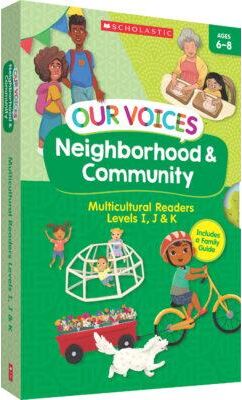
Our Voices: Neighborhood & Community Boxed SetFoster a feeling of belonging while building key reading skills with these colorful storybooks that spotlight a variety of neighborhoods and communities. The 10 charming stories feature characters from different cultural backgrounds who learn about...32,37 $*Shipping: 0,00 $Secure redirect to the provider
-
Nagdi Suleman Discovering Through Death - Beliefs and Practices - Non Fiction - PaperbackTitle:. Discovering Through Death - Beliefs and Practices Condition: BRAND NEW. Format: Paperback Overview:. Discovering Through Death - Beliefs and Practices invites readers into a thoughtful, interdisciplinary exploration of how cultures interpret mortality and mark farewell. This paperback offers clear, accessible prose that unwraps complex ideas without jargon. It examines why societies ritualize death, how mourning shapes communities, and how beliefs influence end-of-life decisions in everyday life. Spanning historical sources and contemporary practices, the book weaves anthropology, religious studies, psychology, and ethics to present a nuanced panorama of dying cultures around the world. Expect concise, well-structured chapters, each accompanied by key terms and reflective prompts that encourage personal engagement rather than passive reading. The author presents case studies—from quiet village rites to urban memorial ceremonies—to illuminate both universal themes and striking differences. For students, caregivers, nurses, clergy, and curious readers, this guide offers practical insights: how rituals provide meaning, how conversations about death improve care, and how to approach sensitive topics with respect. The tone is scholarly yet approachable, never sensational, inviting readers to examine their own beliefs while building empathy for others. Design elements such as boxed sidebars, glossary terms, and reading prompts make it an ideal companion for coursework, reading groups, or solo study. By the final chapter, you’ll have a framework for understanding death not as a distant incident, but as a deeply human process that unites us across cultures. What Makes This Book Stand Out:. Unlike many introductions, Discovering Through Death grounds theory in everyday practice. The author threads cross-cultural comparisons with accessible explanations of ritual meanings, grief processes, and ethical questions around death and dying. It is not a sterile survey; it invites readers to consider how beliefs inform caregiving, policy, and personal decisions. The inclusion of real-world case studies helps readers imagine themselves in different cultural contexts, while digestible summaries at the end of each chapter reinforce learning. A thoughtfully compiled glossary demystifies terms such as eschatology, ritual transition, and bereavement; sidebars offer quick takeaways for students, teachers, or busy professionals. The narrative pace balances curiosity with empathy, encouraging reflective reading and discussion. Whether you’re studying for a course, supporting someone at end of life, or simply seeking a broader understanding of mortality, this book provides a reliable, respectful lens that can be revisited chapter by chapter. Who This Book Is Perfect For:. Perfect for undergraduates and postgraduates studying anthropology, religious studies, sociology, or medical humanities; professionals in palliative care, nursing, social work, and chaplaincy;...99,99 £*Shipping: 0,00 £Secure redirect to the provider
-
HarperCollins The Fellowship of the Ring Book One by J.R.R. Tolkien - Fiction - PaperbackTitle:. The Fellowship of the Ring Format: Paperback Overview:. J.R.R. Tolkien’s masterwork begins here, launching readers into the richly imagined landscape of Middle-earth with a story that fundamentally reshaped the fantasy genre. As Book One of The Lord of the Rings trilogy, this volume follows humble hobbit Frodo Baggins as he inherits an ancient and perilous artefact in the quiet village of Hobbiton. Guided by the wizard Gandalf, Frodo must flee his home and join forces with seven other companions to embark on a hazardous journey toward Mordor. Only someone who forged the cursed ring holds the power to destroy it, making their mission both desperate and vital. Written with meticulous care and profound linguistic depth, this edition brings back one of literature’s most enduring adventures. Packed with sweeping horizons, looming shadows, and moments of quiet wonder, it sets the stage for a sprawling epic that has captivated generations. Whether you are stepping into Tolkien’s realm for the very first time or returning to familiar paths, this paperback delivers the definitive opening chapter in a timeless quest. What Makes This Book Stand Out:. Tolkien’s prose operates at a rare intersection of mythic scale and intimate character study, drawing readers into a world that feels archaeologically real rather than merely invented. The initial chapters establish a deceptively gentle pace before gradually tightening into a harrowing escape across the Shire and beyond. Every forest, river, and mountain carries historical weight, reflecting centuries of invented lore that underpin the central conflict. This standalone volume also excels because it functions as both a complete narrative arc and an indispensable gateway to a larger mythology. Readers who appreciate carefully mapped geographies, intricate political dynamics among Elves, Men, and Dwarves, and themes of courage against overwhelming darkness will find endless richness here. The physical paperback format further enhances the experience, offering a portable yet substantial companion for long journeys while preserving the original text without compromise. Who This Book Is Perfect For:. This edition is ideally suited for first-time fantasy readers seeking a foundational classic, university students analysing modern English literature, and devoted followers revisiting Tolkien’s original vision ahead of any screen adaptations. It appeals strongly to bibliophiles who prefer traditional print bindings over digital formats, allowing natural marginalia and easy navigation through dense descriptive passages. Parents looking for mature crossover fiction that bridges young adult and adult audiences will also find it highly rewarding. Collectors and casual gift-givers benefit from its universal recognition and enduring shelf presence. Ultimately, anyone craving immersive escapism grounded in coherent internal logic and profound moral complexity will discover something deeply satisfying within these pages....8,99 £*Shipping: 2,99 £Secure redirect to the provider
-
What is morality?
Morality refers to a set of principles or values that guide individuals on what is considered right or wrong behavior. It is a code of conduct that helps people make ethical decisions and distinguish between good and bad actions. Morality is often influenced by cultural, religious, and societal norms, and it plays a crucial role in shaping how individuals interact with others and navigate complex ethical dilemmas. **
-
Did Nietzsche want to abolish morality or enforce the master morality?
Nietzsche did not want to abolish morality altogether, but rather to challenge and critique the existing moral values of his time. He sought to undermine the traditional Christian morality, which he saw as promoting weakness and submission, and instead advocated for the reevaluation and redefinition of values based on what he called the "master morality." This master morality emphasized strength, power, and individual will, and Nietzsche believed it to be more in line with human nature and the pursuit of greatness. Therefore, Nietzsche aimed to enforce the master morality as a replacement for the prevailing moral values of his time. **
-
Is there only subjective morality or is there also objective morality?
There is ongoing debate about whether morality is purely subjective or if there are objective moral truths. Some argue that morality is entirely subjective, meaning that it is based on individual beliefs, cultural norms, and personal experiences. Others believe in the existence of objective moral principles that are independent of individual perspectives and cultural influences. This debate is complex and has been discussed by philosophers and ethicists for centuries, and there is no consensus on the matter. **
-
Can one afford morality?
Morality is not something that can be bought or sold, as it is a set of principles and values that guide one's actions and decisions. While there may be costs associated with living a moral life, such as making sacrifices or facing challenges, ultimately, morality is a choice that individuals make based on their beliefs and values. Therefore, one can afford morality by prioritizing it in their decision-making and actions, regardless of their financial situation. **
Similar search terms for Morality
-
Skip's Garage Faith Over Fear Cornhole Boards"Includes: (2) ACA Regulation Size Cornhole Boards. Boards are Regulation 24"" Wide x 48"" Long. Easily Add All-Weather Resin Filled Bags. Add Accessories like a Carrying Case or Board Lights. Lights are Multicolor and Easily Change Colors & Modes."304,49 $*Shipping: 0,00 $Secure redirect to the provider
-
Skip's Garage Faith Over Fear Cornhole Boards"Includes: (2) ACA Regulation Size Cornhole Boards. Boards are Regulation 24"" Wide x 48"" Long. Easily Add All-Weather Resin Filled Bags. Add Accessories like a Carrying Case or Board Lights. Lights are Multicolor and Easily Change Colors & Modes."344,49 $*Shipping: 0,00 $Secure redirect to the provider
-
Skip's Garage Faith Over Fear Cornhole Boards"Includes: (2) ACA Regulation Size Cornhole Boards. Boards are Regulation 24"" Wide x 48"" Long. Easily Add All-Weather Resin Filled Bags. Add Accessories like a Carrying Case or Board Lights. Lights are Multicolor and Easily Change Colors & Modes."351,99 $*Shipping: 0,00 $Secure redirect to the provider
-
Skip's Garage Faith Over Fear Cornhole Boards"Includes: (2) ACA Regulation Size Cornhole Boards. Boards are Regulation 24"" Wide x 48"" Long. Easily Add All-Weather Resin Filled Bags. Add Accessories like a Carrying Case or Board Lights. Lights are Multicolor and Easily Change Colors & Modes."471,49 $*Shipping: 0,00 $Secure redirect to the provider
-
What is Philistine morality?
Philistine morality refers to a set of values and beliefs that prioritize material wealth, superficial appearances, and conformity to societal norms over deeper ethical considerations. It is often associated with a lack of intellectual or artistic appreciation, as well as a focus on immediate gratification and self-interest. The term "Philistine" originally referred to a group of people in ancient times who were considered uncultured and unrefined, and today it is used metaphorically to criticize individuals or societies that prioritize materialism and conformity over more meaningful or ethical pursuits. **
-
Is morality scientifically explainable?
Morality is a complex concept that is influenced by a variety of factors, including cultural, social, and psychological elements. While scientific research can provide insights into the origins and development of moral beliefs and behaviors, it may not be able to fully explain the subjective and value-laden nature of morality. Additionally, moral judgments often involve emotions, intuitions, and personal experiences that may not be easily captured or explained by scientific methods alone. Therefore, while science can contribute to our understanding of morality, it may not be able to provide a complete and definitive explanation. **
-
What does morality mean?
Morality refers to a set of principles or values that guide an individual's behavior and decision-making, distinguishing between right and wrong. It encompasses concepts such as honesty, integrity, fairness, and compassion, and often reflects societal norms and cultural beliefs. Morality can be influenced by religion, philosophy, and personal experiences, and plays a crucial role in shaping individual and collective ethical conduct. **
-
Why is there morality?
Morality exists as a set of principles and guidelines for human behavior in order to promote social harmony, cooperation, and well-being. It provides a framework for individuals to make ethical decisions and consider the impact of their actions on others. Morality also serves to regulate and maintain order within societies, as it establishes norms and expectations for how people should treat one another. Ultimately, morality is a product of human evolution and social development, arising from the need to navigate complex social interactions and promote the greater good. **
* All prices are inclusive of VAT and, if applicable, plus shipping costs. The offer information is based on the details provided by the respective shop and is updated through automated processes. Real-time updates do not occur, so deviations can occur in individual cases. ** Note: Parts of this content were created by AI.